SPR-321
Alpha Synuclein Monomers (Type 1)

Eine Lieferung in diese Region ist nicht möglich.
- SKU:
- SPR-321
- Zusätzliche Namen:
- Alpha-synuclein, Alpha synuclein, Asyn, SNCA, NACP, PARK1, PARK4, PD1, Synuclein alpha, Non-A beta component of AD amyloid, Non-A4 component of amyloid precursor, Synuclein Alpha-140, SYN, Parkinson's disease familial 1 Protein Protein
- Anwendung:
- SDS-PAGE, WB, FuncS
- Molekulargewicht:
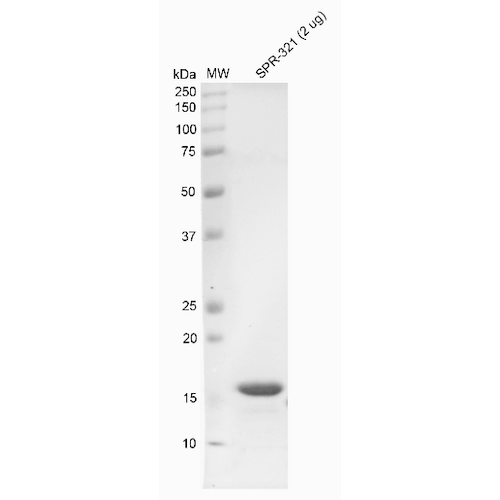
- ~14.46 kDa
- Reinheit:
- >95%
- Aufreinigung:
- Ion Exchange
- Lagerbedingungen:
- -70[o]C
- Hersteller:
- StressMarq Biosciences
- ABP:
- No Import Docs
- Buffer:
- PBS
- Immunogen:
- Alpha Synuclein Monomers
- Spezies:
- Human
- Sequenz:
- MDVFMKGLSK AKEGVVAAAE KTKQGVAEAA GKTKEGVLYV GSKTKEGVVH GVATVAEKTK EQVTNVGGAV VTGVTAVAQK TVEGAGSIAA ATGFVKKDQL GKNEEGAPQE GILEDMPVDP DNEAYEMPSE EGYQDYEPEA
- Uniprot:
- P37840
- Synonyme:
- alpha-synuclein;I+/--synuclein;NACP;non A-beta component of AD amyloid;Non-A beta component of AD amyloid;Non-A4 component of amyloid precursor;PARK1;PARK4;PD1;synuclein alpha-140;synuclein, alpha (non A4 component of amyloid precursor);truncated alpha synuclein
- Weitere Details:
- Alpha-synuclein (A Alpha-syn), a 140-amino acid neuronal protein encoded by the SNCA gene, plays a pivotal role in synaptic vesicle trafficking, neurotransmitter release, and SNARE-complex assembly. In its native monomeric form, A Alpha-syn enhances synaptic vesicle priming and fusion, contributing to efficient neuronal communication. However, dysregulation of A Alpha-syn monomers is increasingly recognized as a critical early event in the pathogenesis of neurodegenerative disorders, particularly synucleinopathies such as Parkinson's disease (PD), Lewy body dementia (LBD), and multiple system atrophy (MSA). [www.uniprot.org] Recent studies reveal that monomeric A Alpha-syn can misfold and aggregate into toxic oligomers and fibrils, initiating a prion-like cascade of intracellular and intercellular propagation. This aggregation disrupts synaptic integrity, impairs dopamine neurotransmission, and triggers neuroinflammation, ultimately leading to neuronal death. Moreover, mutations in SNCA and environmental factors such as exposure to neurotoxins (e.g., rotenone) exacerbate A Alpha-syn pathology, accelerating disease progression. [www.mdpi.com], [link.springer.com] [www.frontiersin.org] Understanding the molecular dynamics of A Alpha-syn monomers, including their interactions with membrane receptors like P2RX7, offers promising avenues for therapeutic intervention. Targeting monomeric A Alpha-syn before pathological aggregation occurs may provide a strategic window for disease-modifying therapies. As research advances, A Alpha-syn monomers continue to emerge as a focal point in unraveling the mechanisms of neurodegeneration and developing precision treatments for synucleinopathies.
- Versandbedingungen:
- Dry Ice