
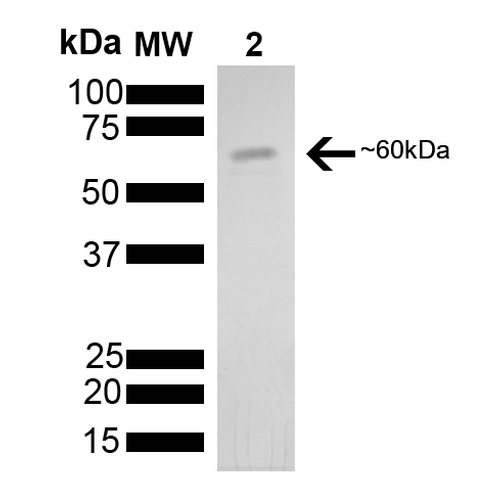
SPR-104
HSP60 Protein

Eine Lieferung in diese Region ist nicht möglich.
- SKU:
- SPR-104
- Zusätzliche Namen:
- HSPD1, HSP60, 60 kDa heat shock protein, mitochondrial, Chaperonin 60, CPN60, HuCHA60, Heat shock protein family D member 1, GroEL homolog, mitochondrial, GROEL, HLD4, HSP 60, HSP65, SPG 13
- Anwendung:
- ELISA, SDS-PAGE, WB, FuncS
- Molekulargewicht:
- ~60 kDa
- Reinheit:
- >90%
- Aufreinigung:
- Affinity Purified
- Lagerbedingungen:
- -20[o]C
- Hersteller:
- StressMarq Biosciences
- ABP:
- No Import Docs
- Buffer:
- 20mM Phosphate Buffer, 150mM NaCl, 10% glycerol
- Immunogen:
- HSP60 Protein
- Spezies:
- Human
- Uniprot:
- P10809
- Synonyme:
- 60 kDa chaperonin;60 kDa heat shock protein, mitochondrial;chaperonin 60;CPN60;epididymis secretory sperm binding protein;GROEL;heat shock 60kDa protein 1 (chaperonin);Heat shock protein 60;heat shock protein 65;HLD4;HSP-60;HSP60;HSP65;HuCHA60;mitochondrial matrix protein P1;P60 lymphocyte protein;short heat shock protein 60 Hsp60s1;SPG13
- Weitere Details:
- HSP60 is a mitochondrial chaperonin essential for the proper folding and assembly of proteins within the mitochondrial matrix. It plays a critical role in maintaining mitochondrial proteostasis, especially under conditions of cellular stress. HSP60 is highly conserved across species and is constitutively expressed, with levels increasing in response to heat shock and other stressors. In neuroscience, HSP60 has gained attention for its involvement in neurodegenerative diseases characterized by mitochondrial dysfunction and protein misfolding, such as Alzheimer's, Parkinson's, and multiple sclerosis. Disruptions in HSP60 expression or function can impair mitochondrial protein folding, leading to oxidative stress, energy deficits, and neuronal apoptosis. Beyond its mitochondrial role, HSP60 has been implicated in immune signaling and inflammation, processes that are increasingly recognized as contributors to neurodegeneration. Its presence in extracellular compartments and association with autoimmune responses further suggest a role in neuroinflammatory conditions. HSP60's ability to form oligomeric complexes, its ATPase activity, and its interaction with co-chaperonin HSP10 are essential for its chaperone function. These properties make it a valuable target for studying mitochondrial resilience and neuroprotection in degenerative brain disorders.
- Versandbedingungen:
- Blue Ice