SPC-810
GDNF Antibody

Eine Lieferung in diese Region ist nicht möglich.
- SKU:
- SPC-810
- Zusätzliche Namen:
- GDNF, Glial cell line-derived neurotrophic factor, Glial Cell Line Derived Neurotrophic Factor, Glial cell derived neurotrophic factor, Glial derived neurotrophic factor, Astrocyte-derived trophic factor, Astrocyte derived trophic factor, Astrocyte derived trophic factor 1, ATF, ATF1, ATF2, Atf, HFB1 GDNF, hGDNF, HSCR3, GDNF_HUMAN
- Anwendung:
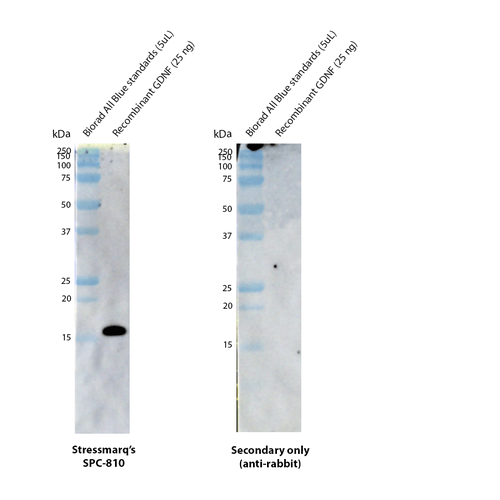
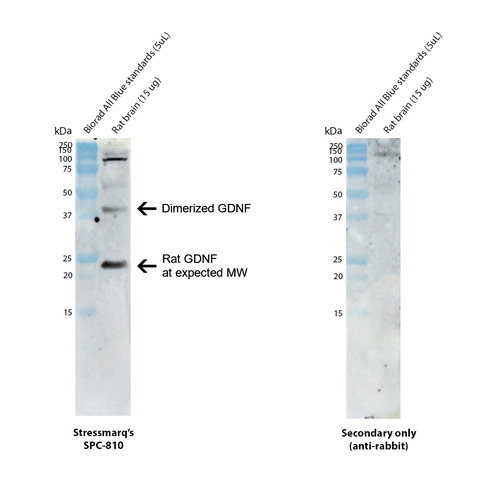
- WB
- Konzentration:
- 1 mg/ml
- Spezies-Reaktivität:
- Human
- Aufreinigung:
- Protein A Purified
- Lagerbedingungen:
- -20[o]C
- Hersteller:
- StressMarq Biosciences
- Host:
- Rabbit
- Reaktivitäten:
- Human, Mouse, Rat
- ABP:
- IMP-GEN-2015-06 < 10% Serum <100ml
- Buffer:
- PBS pH 7.4, 50% glycerol, 0.09% sodium azide
- Immunogen:
- Recombinant Human GDNF Protein, Full length (AA78-211)
- Uniprot:
- P39905
- Synonyme:
- astrocyte-derived trophic factor;ATF;ATF1;ATF2;glial cell line-derived neurotrophic factor;HFB1-GDNF;HSCR3
- Weitere Details:
- Glial cell line-derived neurotrophic factor (GDNF) is a highly conserved, secreted protein essential for neuronal survival, differentiation, and regeneration in both the central and peripheral nervous systems. As the founding member of the GDNF family ligands (GFLs), GDNF exerts its biological effects through a receptor complex composed of GFRA Alpha1 and the RET tyrosine kinase. This interaction is facilitated by the mature GDNF protein, which is generated from a 211-residue precursor (pro-GDNF) via proteolytic cleavage and structural stabilization through disulfide bonding and glycosylation. GDNF is widely expressed by neurons, glial cells, and skeletal muscle, particularly during development and in response to injury. It plays a critical role in supporting midbrain dopaminergic neurons, enhancing dopamine uptake, and promoting axonal growth. These properties have positioned GDNF as a promising therapeutic candidate in neurodegenerative diseases such as Parkinson's disease, amyotrophic lateral sclerosis (ALS), and synucleinopathies. Despite early evidence suggesting strong neuroprotective effects, recent studies have reported variable outcomes in disease models, highlighting the complexity of GDNF signaling and its context-dependent efficacy. Factors such as delivery method, receptor availability, and proteolytic processing may influence therapeutic outcomes. As research advances, GDNF remains a key focus in the development of neurorestorative strategies aimed at halting or reversing neuronal degeneration. Understanding its molecular mechanisms and optimizing its delivery are critical steps toward harnessing its full therapeutic potential.
- Versandbedingungen:
- Blue Ice