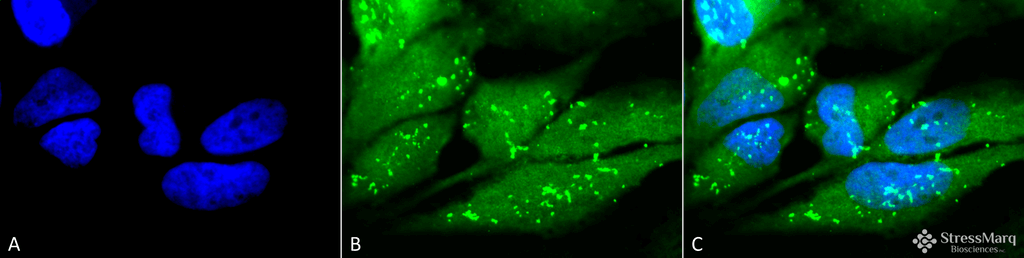
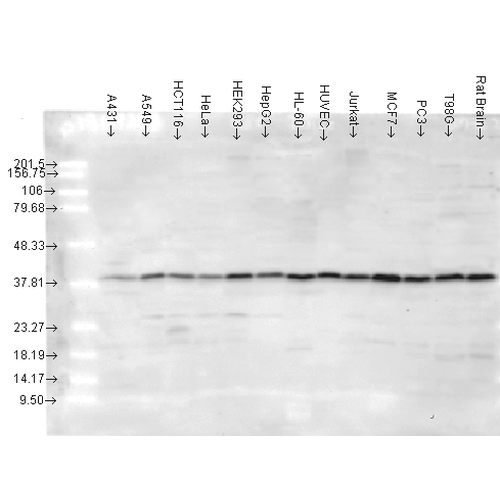
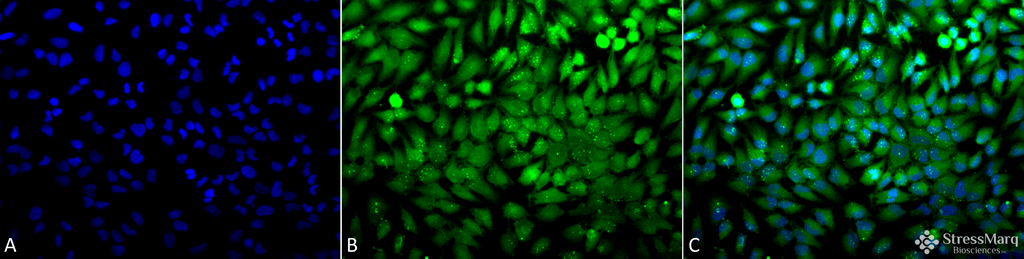
SPC-172
p38 Antibody

Eine Lieferung in diese Region ist nicht möglich.
- SKU:
- SPC-172
- Zusätzliche Namen:
- CSAID Binding protein 1, CSBP1, CSBP2, EXIP, MAP kinase MXI2, MAPkinase p38alpha, MAPK14, p38 ALPHA, p38 MAP kinase, p38 mitogen activated protein kinase, RK, SAPK 2A, Stress activated protein kinase 2A
- Anwendung:
- IHC, WB, IF, ICC, IP
- Konzentration:
- 1 mg/ml
- Spezies-Reaktivität:
- Human
- Aufreinigung:
- Affinity Purified
- Lagerbedingungen:
- -20[o]C
- Hersteller:
- StressMarq Biosciences
- Host:
- Rabbit
- Reaktivitäten:
- Bovine, Canine, Hamster, Human, Mouse, Porcine, Rabbit, Rat, Guinea Pig, Ovine
- ABP:
- IMP-GEN-2015-06 < 10% Serum <100ml
- Buffer:
- PBS pH7.4, 50% glycerol, 0.09% sodium azide
- Immunogen:
- A 20 residue synthetic peptide based on the human p38 with the cysteine residue added and coupled to KLH
- Uniprot:
- Q16539
- Synonyme:
- CSAID-binding protein;CSBP;CSBP1;CSBP2;CSPB1;cytokine suppressive anti-inflammatory drug binding protein;Cytokine suppressive anti-inflammatory drug-binding protein;EXIP;MAP kinase 14;MAP kinase Mxi2;MAP kinase p38 alpha;MAX-interacting protein 2;mitogen-activated protein kinase 14;mitogen-activated protein kinase p38 alpha;Mxi2;p38;p38 MAP kinase;p38 mitogen activated protein kinase;p38ALPHA;p38alpha Exip;PRKM14;PRKM15;RK;SAPK2A;stress-activated protein kinase 2A
- Weitere Details:
- p38 is a member of the mitogen-activated protein kinase (MAPK) family, specifically involved in cellular responses to stress and inflammation. In the nervous system, p38 plays a pivotal role in regulating apoptosis, neuroinflammation, and synaptic plasticity-processes that are frequently dysregulated in neurodegenerative diseases. Upon activation by environmental and cellular stressors such as oxidative damage, cytokines, and UV radiation, p38 translocates to the nucleus where it modulates transcription factors and pro-apoptotic proteins. This leads to the release of cytochrome c, activation of caspase-3, and cleavage of PARP, promoting programmed cell death. In Alzheimer's, Parkinson's, and ALS, aberrant p38 signaling contributes to neuronal loss, glial activation, and neurodegenerative phenotypes. As a result, p38 has emerged as a therapeutic target for modulating neuroinflammation and preventing neuronal degeneration.
- Versandbedingungen:
- Blue Ice