SPC-142
CDC37 Antibody

Eine Lieferung in diese Region ist nicht möglich.
- SKU:
- SPC-142
- Zusätzliche Namen:
- CDC37, Hsp90 co-chaperone Cdc37, Cell division control protein 37, Hsp90 chaperone protein kinase-targeting subunit, CDC37_HUMAN, CDC37A, p50, p50Cdc37, S. cerevisiae hypothetical protein CDC37
- Anwendung:
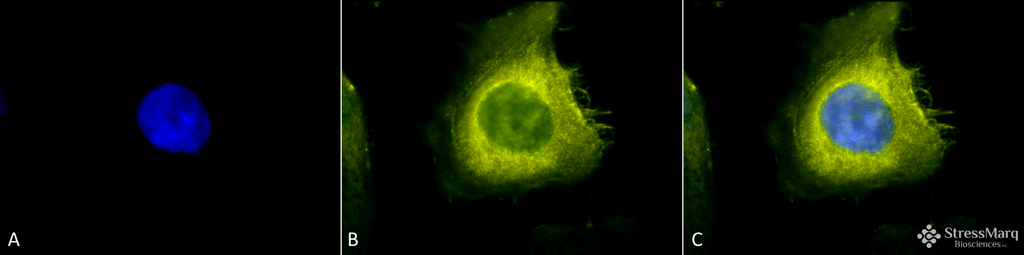
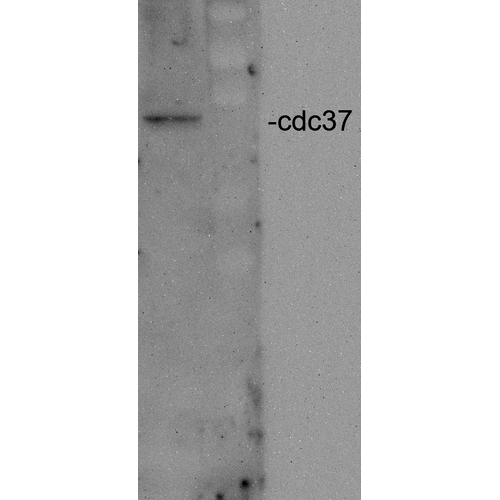
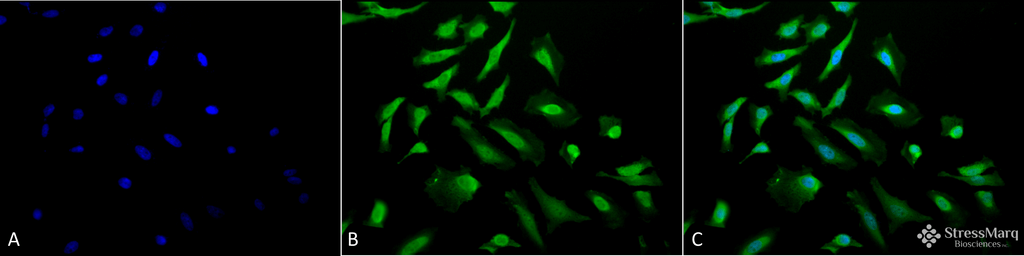
- IHC, WB, IF, ICC
- Konzentration:
- 1.68 mg/ml
- Spezies-Reaktivität:
- Human
- Aufreinigung:
- Protein A Purified
- Lagerbedingungen:
- -20[o]C
- Hersteller:
- StressMarq Biosciences
- Host:
- Rabbit
- Reaktivitäten:
- Human
- ABP:
- IMP-GEN-2015-06 < 10% Serum <100ml
- Buffer:
- PBS pH7.4, 50% glycerol, 0.09% sodium azide
- Immunogen:
- Native human Cdc37, full length
- Uniprot:
- Q16543
- Synonyme:
- CDC37 (cell division cycle 37, S. cerevisiae, homolog);CDC37 cell division cycle 37 homolog;cell division cycle 37 homolog;hsp90 chaperone protein kinase-targeting subunit;hsp90 co-chaperone Cdc37;P50CDC37
- Weitere Details:
- CDC37 is a co-chaperone of HSP90 that plays a pivotal role in stabilizing and directing HSP90 to a wide array of protein kinases, including CDK4, CDK6, SRC, RAF1, and eIF2A Alpha kinases. By facilitating the maturation and functional maintenance of these kinases, CDC37 is essential for signal transduction, cell cycle progression, and stress responses. In the nervous system, CDC37's regulation of kinase stability intersects with pathways critical for neuronal survival, synaptic plasticity, and neuroinflammation. Dysregulation of CDC37 or its client kinases has been implicated in neurodegenerative conditions such as Alzheimer's disease and Parkinson's disease, where aberrant kinase signaling contributes to tau hyperphosphorylation, protein aggregation, and neuronal loss. Given its central role in proteostasis and kinase regulation, CDC37 is emerging as a potential therapeutic target for modulating neurodegenerative signaling cascades.
- Versandbedingungen:
- Blue Ice