SPC-106
HSP27 Antibody

Eine Lieferung in diese Region ist nicht möglich.
- SKU:
- SPC-106
- Zusätzliche Namen:
- HSPB1, HSP27, HSP25, HSP28, Heat shock protein beta-1, Heat shock 27 kDa protein, MKBP, DMPK-binding protein, SRP27, 28kDa heat shock protein, CMT2F
- Anwendung:
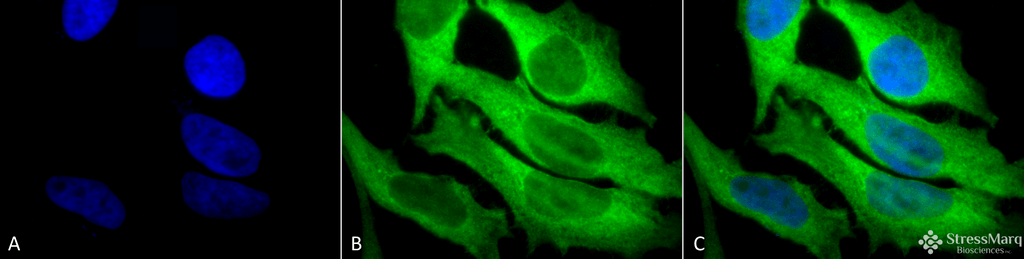
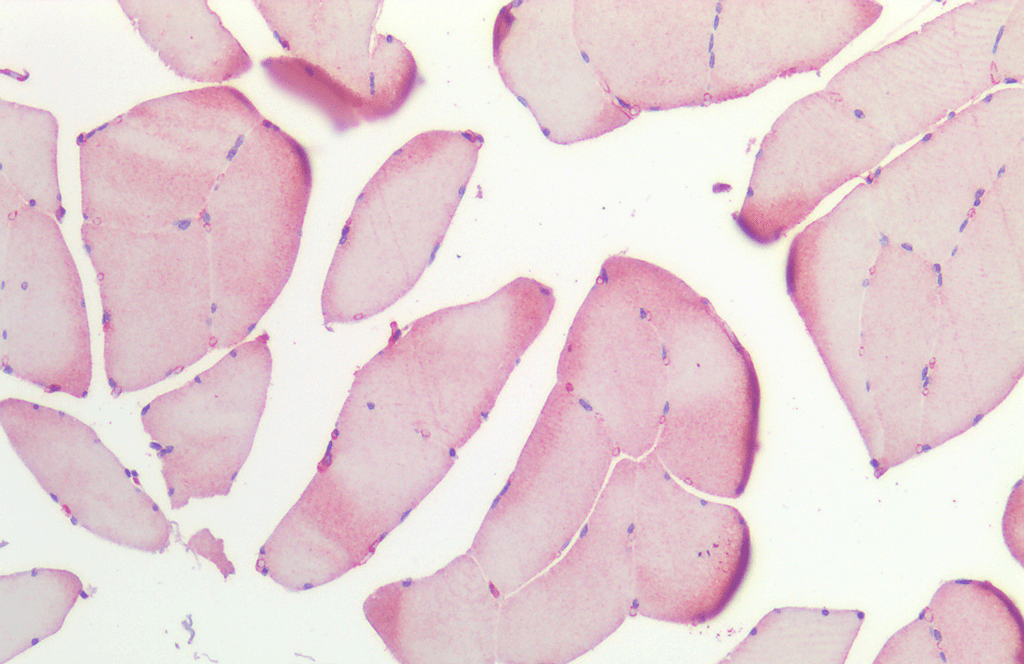
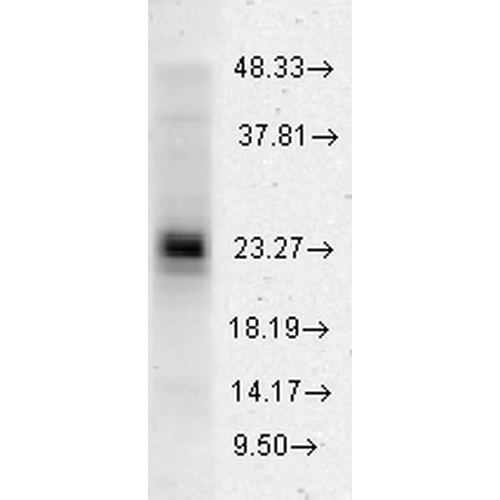
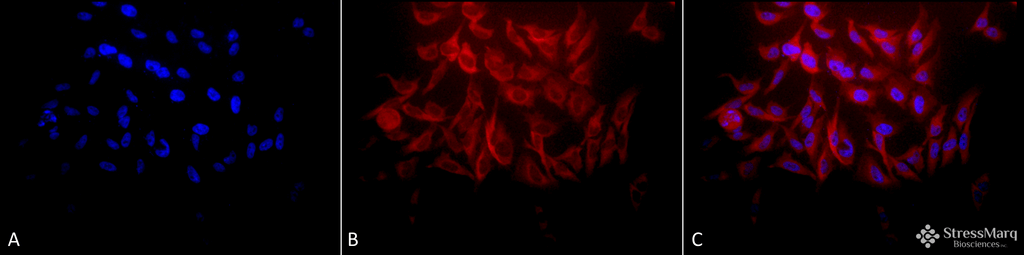
- Flow Cytometry, IHC, WB, IF, ICC
- Konzentration:
- 1.38 mg/ml
- Spezies-Reaktivität:
- Human
- Aufreinigung:
- Protein A Purified
- Lagerbedingungen:
- -20[o]C
- Hersteller:
- StressMarq Biosciences
- Host:
- Rabbit
- Reaktivitäten:
- Canine, Fish, Human, Mouse
- ABP:
- IMP-GEN-2015-06 < 10% Serum <100ml
- Buffer:
- PBS pH7.4, 50% glycerol, 0.09% sodium azide
- Immunogen:
- Human HSP27, His tagged
- Uniprot:
- P04792
- Synonyme:
- 28 kDa heat shock protein;CMT2F;epididymis secretory protein Li 102;estrogen-regulated 24 kDa protein;heat shock 27 kDa protein;heat shock 27kD protein 1;heat shock 27kDa protein 1;heat shock protein beta-1;HEL-S-102;HMN2B;HS.76067;Hsp25;HSP27;HSP28;putative heat shock protein family B member 1 isoform;SRP27;stress-responsive protein 27
- Weitere Details:
- HSP27, a member of the small heat shock protein (sHSP) family, is an abundant and ubiquitously expressed molecular chaperone found in both normal and cancerous human cells. Structurally, HSP27 features a conserved A Alpha-crystallin domain at the C-terminus and a less conserved N-terminal WD/EPF domain, which is essential for forming high-molecular-weight oligomers. These oligomers, composed of 8-40 monomers, are critical for HSP27's chaperone activity-larger assemblies exhibit strong anti-aggregation properties, while dimers are inactive. Under non-stress conditions, HSP27 resides in the cytoplasm but rapidly translocates to the nucleus in response to cellular stress, where it may help stabilize DNA and nuclear membranes. Functioning as an ATP-independent chaperone, HSP27 prevents protein aggregation and stabilizes partially unfolded proteins, facilitating their refolding via the HSP70 complex. In neuroscience, HSP27 is increasingly recognized for its role in protecting neurons from proteotoxic stress, oxidative damage, and apoptosis-key features of neurodegenerative diseases such as Alzheimer's, Parkinson's, and ALS. It inhibits apoptotic signaling by blocking the cytochrome c/Apaf-1/procaspase-9 complex and may also influence cytoskeletal dynamics through interactions with actin and myosin. HSP27 expression is tightly regulated by phosphorylation, which promotes the formation of large, active oligomers. Its involvement in stress response, apoptosis inhibition, and cell differentiation highlights its therapeutic potential in neurodegenerative disease research and intervention.
- Versandbedingungen:
- Blue Ice