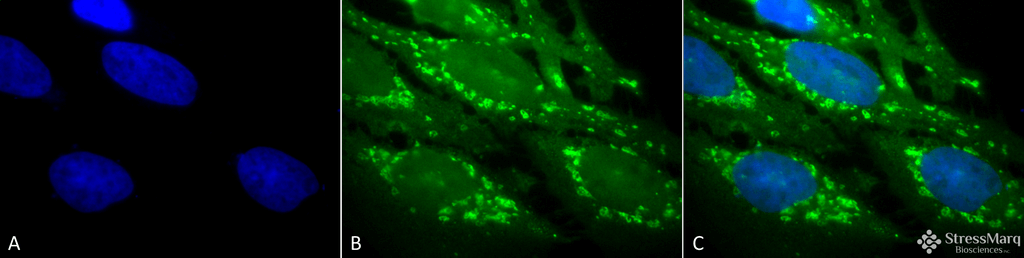

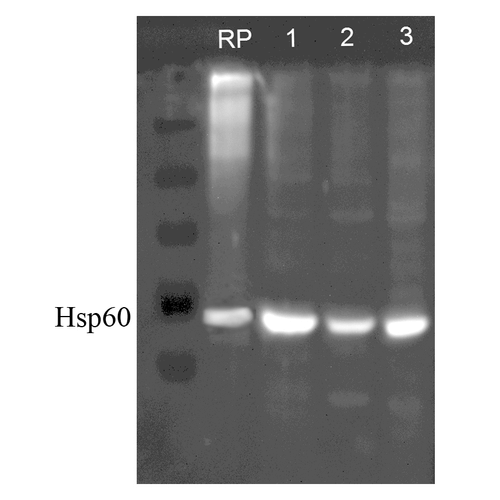
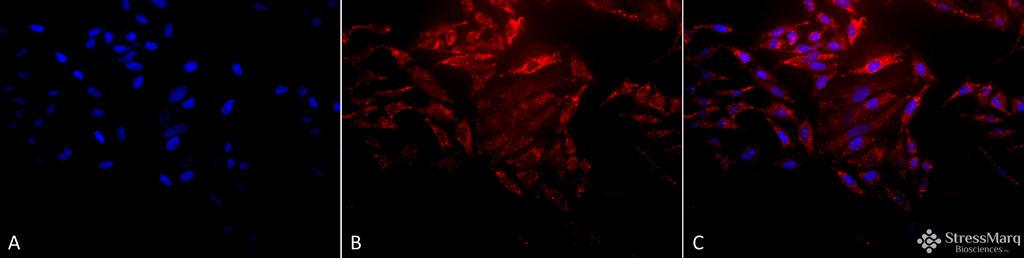
SPC-105
HSP60 Antibody

Eine Lieferung in diese Region ist nicht möglich.
- SKU:
- SPC-105
- Zusätzliche Namen:
- HSPD1, HSP60, 60 kDa heat shock protein, mitochondrial, Chaperonin 60, CPN60, HuCHA60, Heat shock protein family D member 1, GroEL homolog, mitochondrial, GROEL, HLD4, HSP 60, HSP65, SPG 13
- Anwendung:
- ELISA, IHC, WB, IF, ICC, IP
- Konzentration:
- 1 mg/ml
- Spezies-Reaktivität:
- Human
- Aufreinigung:
- Protein A Purified
- Lagerbedingungen:
- -20[o]C
- Hersteller:
- StressMarq Biosciences
- Host:
- Rabbit
- Reaktivitäten:
- Bovine, Canine, Hamster, Human, Mouse, Rabbit, Rat
- ABP:
- IMP-GEN-2015-06 < 10% Serum <100ml
- Buffer:
- PBS, 50% glycerol, 0.09% sodium azide
- Immunogen:
- Human HSP60 produced through recombinant DNA methods in E.coli
- Uniprot:
- P10809
- Synonyme:
- 60 kDa chaperonin;60 kDa heat shock protein, mitochondrial;chaperonin 60;CPN60;epididymis secretory sperm binding protein;GROEL;heat shock 60kDa protein 1 (chaperonin);Heat shock protein 60;heat shock protein 65;HLD4;HSP-60;HSP60;HSP65;HuCHA60;mitochondrial matrix protein P1;P60 lymphocyte protein;short heat shock protein 60 Hsp60s1;SPG13
- Weitere Details:
- HSP60, also known as Cpn60 or GroEL in prokaryotes, is a highly conserved molecular chaperone essential for protein folding and cellular homeostasis. Present in both prokaryotic and eukaryotic cells, HSP60 prevents protein misfolding and aggregation during biogenesis and under stress conditions. In mammals, HSP60 is localized to the mitochondria, where it partners with its co-chaperonin HSP10 to facilitate the proper folding and assembly of mitochondrial proteins. Structurally, HSP60 forms homo-oligomeric complexes of 7 or 14 subunits, exhibiting ATPase activity and reversible dissociation in the presence of Mg²⁺ and ATP. Its evolutionary conservation is underscored by the ability of human HSP60-HSP10 to functionally replace the bacterial GroEL-GroES system in engineered E. coli strains. Beyond its canonical role in mitochondrial proteostasis, HSP60 has been implicated in immune regulation and cellular stress responses. Elevated levels of HSP60 have been associated with several chronic diseases, including autoimmune disorders, coronary artery disease, diabetes, and neurodegenerative conditions such as Alzheimer's disease and multiple sclerosis. In neuroscience, HSP60's role in maintaining mitochondrial integrity is particularly significant, as mitochondrial dysfunction is a central feature of many neurodegenerative diseases. Its dual function in protein quality control and cellular protection positions HSP60 as a promising biomarker and therapeutic target in neurodegeneration research.
- Versandbedingungen:
- Blue Ice