

SMC-443D-APC
LAR Antibody, Clone N165/38: APC

Eine Lieferung in diese Region ist nicht möglich.
- SKU:
- SMC-443D-APC
- Zusätzliche Namen:
- PTPRF, LAR, Leukocyte antigen related, Leukocyte antigen related PTP receptor, Leukocyte antigen related tyrosine phosphatase, Leukocyte common antigen related, Receptor-type tyrosine-protein phosphatase F, Receptor type tyrosine protein phosphatase F precursor, Protein Tyrosine Phosphatase Receptor Type F, Protein tyrosine phosphatase receptor type F polypeptide, Receptor linked phosphatase LAR, LAR protein, LARS, LARFN5C, LCA homolog, FLJ43335, FLJ45062, FLJ45567
- Anwendung:
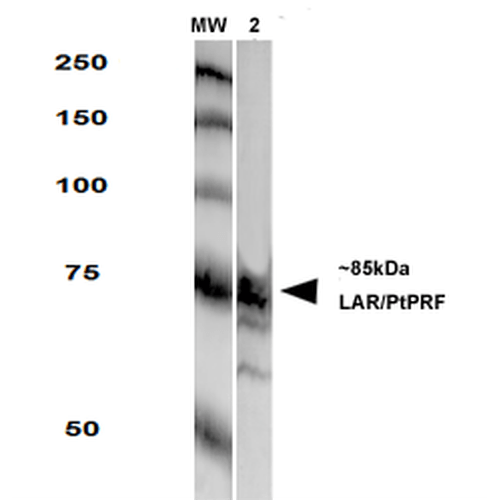
- WB, IF, ICC
- Konzentration:
- 1 mg/ml
- Spezies-Reaktivität:
- Human
- Aufreinigung:
- Protein G Purified
- Lagerbedingungen:
- See Manual
- Hersteller:
- StressMarq Biosciences
- Host:
- Mouse
- Reaktivitäten:
- Human, Mouse, Rat
- ABP:
- IMP-GEN-2015-06 < 10% Serum <100ml
- Buffer:
- 95.46mM Phosphate, 2.48mM MES and 2mM EDTA
- Immunogen:
- Fusion protein amino acids 1315-1607 (cytoplasmic C-terminus) of human LAR. 97% identical in both rat and mouse. >80% identity with PTPRD and PTPRS. >50% identity with PTPRM and PTPRK.
- Klon:
- N165/38 (Formerly sold as S165-38)
- Uniprot:
- P10586
- Synonyme:
- BNAH2;LAR;LCA-homolog;leukocyte antigen-related (LAR) PTP receptor;leukocyte antigen-related tyrosine phosphatase;leukocyte common antigen related;protein tyrosine phosphatase, receptor type, F polypeptide;receptor-linked protein-tyrosine phosphatase LAR;receptor-type tyrosine-protein phosphatase F
- Weitere Details:
- LAR (Leukocyte Common Antigen-Related Protein), encoded by PTPRF, is a receptor-type protein tyrosine phosphatase involved in neural development and regeneration. It regulates cell adhesion, cytoskeletal dynamics, and synaptic plasticity by dephosphorylating B Beta-catenin and modulating cadherin-mediated junctions. LAR influences neurite outgrowth, axon guidance, and actin remodeling, making it critical for neurodevelopment and repair. In neurodegenerative contexts, LAR dysregulation may impair synaptic stability and neuronal connectivity. Its role in insulin signaling and inflammation further links it to metabolic and neurodegenerative disorders. As a modulator of synaptic architecture and signaling, LAR represents a potential target for therapeutic strategies aimed at restoring neural function.
- Versandbedingungen:
- Blue Ice