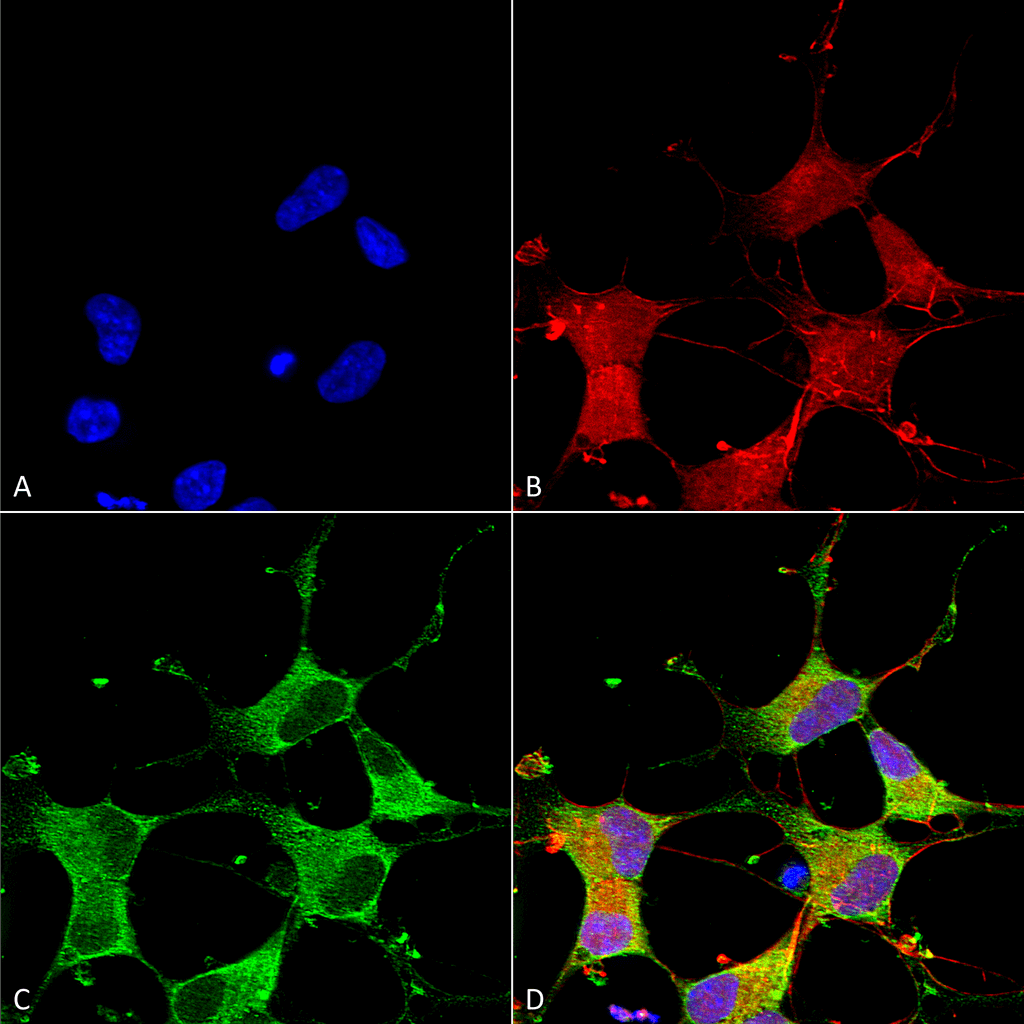

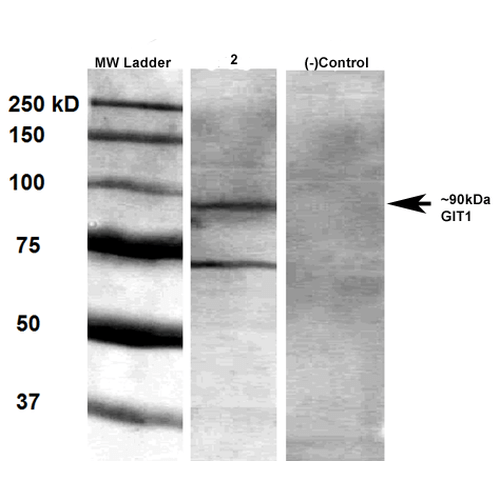
SMC-413D-APC
GIT1 Antibody, Clone N39B/8: APC

Eine Lieferung in diese Region ist nicht möglich.
- SKU:
- SMC-413D-APC
- Zusätzliche Namen:
- ARF GAP GIT1, ARF GTPase-activating protein, ARF GTPase-activating protein GIT1, CAT1, Cool-associated and tyrosine-phosphorylated protein 1, G protein-coupled receptor kinase-interactor 1, GIT 1, GIT1, GRK-interacting protein 1
- Anwendung:
- WB, IF, ICC, IP
- Konzentration:
- 1 mg/ml
- Spezies-Reaktivität:
- Rat
- Aufreinigung:
- Protein G Purified
- Lagerbedingungen:
- See Manual
- Hersteller:
- StressMarq Biosciences
- Host:
- Mouse
- Reaktivitäten:
- Human, Mouse, Rat
- ABP:
- IMP-GEN-2015-06 < 10% Serum <100ml
- Buffer:
- 95.46mM Phosphate, 2.48mM MES and 2mM EDTA
- Immunogen:
- Fusion protein amino acids 375-770 (C-terminus) of rat GIT1
- Klon:
- N39B/8 (Formerly sold as S39B-8)
- Uniprot:
- Q9Z272.1
- Synonyme:
- ARF GAP GIT1;ARF GTPase-activating protein GIT1;CAT-1;CAT1;cool-associated and tyrosine-phosphorylated protein 1;G protein-coupled receptor kinase interacting ArfGAP 1;G protein-coupled receptor kinase-associated ADP ribosylation factor GTPase-activating protein (GIT1);G protein-coupled receptor kinase-interactor 1;GRK-interacting protein 1;GRK-interactor 1
- Weitere Details:
- GIT1 (G-protein-coupled receptor kinase-interacting protein 1) is a highly conserved scaffold protein that plays a central role in coordinating intracellular signaling, cytoskeletal remodeling, and cell migration. It contains multiple interaction domains that enable binding to small GTPases (such as ARF, Rac, and Cdc42), kinases (including PAK and MEK), the Rho-family GEF PIX, and the focal adhesion protein paxillin. Through these interactions, GIT1 regulates focal adhesion dynamics and membrane protrusion formation. In the nervous system, GIT1 is enriched at synapses and is essential for synapse formation, dendritic spine morphogenesis, and synaptic plasticity. Its localization to cytoplasmic complexes and membrane structures supports its role in neuronal signaling and structural remodeling. Importantly, GIT1 has been implicated in the pathogenesis of Huntington's disease (HD), a neurodegenerative disorder caused by mutations in the huntingtin (HTT) gene. GIT1 directly interacts with mutant HTT, enhancing its proteolysis and potentially contributing to the accumulation of toxic protein fragments. This interaction suggests that altered GIT1 distribution or function may exacerbate neuronal dysfunction and degeneration in HD. Given its dual role in cytoskeletal regulation and synaptic signaling, GIT1 is emerging as a critical molecular player in neurodegenerative disease research. Understanding its mechanisms may reveal novel therapeutic targets for modulating synaptic integrity and mitigating disease progression.
- Versandbedingungen:
- Blue Ice