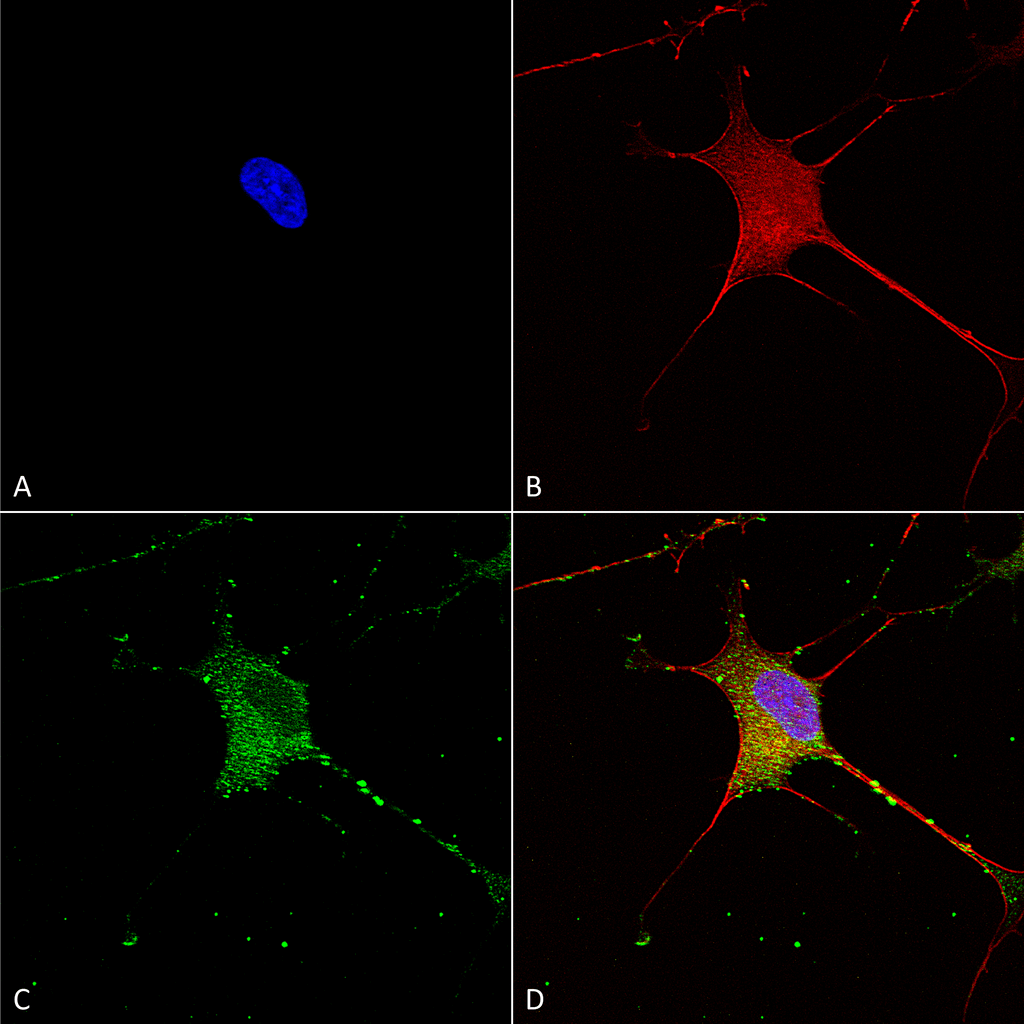


SMC-409
SUR1 Antibody, Clone N289/16

Eine Lieferung in diese Region ist nicht möglich.
- SKU:
- SMC-409
- Zusätzliche Namen:
- AM60008PU-N, ABC36, Abcc8, ATP binding cassette sub family C member 8, HHF1, HRINS, MRP8, PHHI, SUR, SUR1, Sulfonylurea receptor (hyperinsulinemia), ATP binding cassette sub family C (CFTR/MRP) member 8, ATP binding cassette transporter sub family C member 8 (1), ATP-binding cassette sub-family C member 8, HI, SUR1delta2, TNDM2
- Anwendung:
- IHC, WB, IF, ICC
- Konzentration:
- 1 mg/ml
- Spezies-Reaktivität:
- Rat
- Aufreinigung:
- Protein G Purified
- Lagerbedingungen:
- -20[o]C
- Hersteller:
- StressMarq Biosciences
- Host:
- Mouse
- Reaktivitäten:
- Hamster, Human, Mouse, Rat
- ABP:
- IMP-GEN-2015-06 < 10% Serum <100ml
- Buffer:
- PBS pH7.4, 50% glycerol, 0.09% sodium azide
- Immunogen:
- Fusion protein amino acids 1548-1582 (cytoplasmic C-terminus) of rat SUR1
- Klon:
- N289/16 (Formerly sold as S289-16)
- Uniprot:
- Q09429
- Synonyme:
- ATP-binding cassette sub-family C member 8;ATP-binding cassette transporter sub-family C member 8;ATP-binding cassette, sub-family C (CFTR/MRP), member 8;ATP-binding cassette, subfamily C (CFTR/MRP), member 8;sulfonylurea receptor 1;sulphonylurea receptor 1;Sur;Sur1
- Weitere Details:
- Sulfonylurea receptor 1 (SUR1), encoded by the ABCC8 gene, is a regulatory subunit of ATP-sensitive potassium (KATP) channels, which are critical for cellular energy sensing. SUR1 forms a functional complex with inward-rectifier potassium channel subunits Kir6.1 or Kir6.2, assembling into octameric KATP channels that couple cellular metabolic state to membrane excitability. These channels are best known for their role in pancreatic B Beta-cells, where they regulate insulin secretion in response to intracellular ATP/ADP levels. Beyond the pancreas, SUR1 is increasingly recognized for its role in the central nervous system. In neurons and glial cells, SUR1-regulated KATP channels help maintain ionic homeostasis and protect against metabolic stress. Dysregulation of SUR1 expression or function has been implicated in a range of neuropathological conditions, including stroke, traumatic brain injury, and neurodegenerative diseases such as Alzheimer's and Parkinson's. Notably, SUR1 upregulation is associated with the formation of pathological SUR1-TRPM4 channels, which contribute to cerebral edema and secondary injury. As a metabolic sensor and regulator of ion flux, SUR1 represents a promising therapeutic target in neuroscience. Pharmacological modulation of SUR1-containing channels-originally developed for diabetes-may offer neuroprotective benefits by stabilizing neuronal excitability, reducing inflammation, and mitigating energy failure in neurodegenerative contexts.
- Versandbedingungen:
- Blue Ice