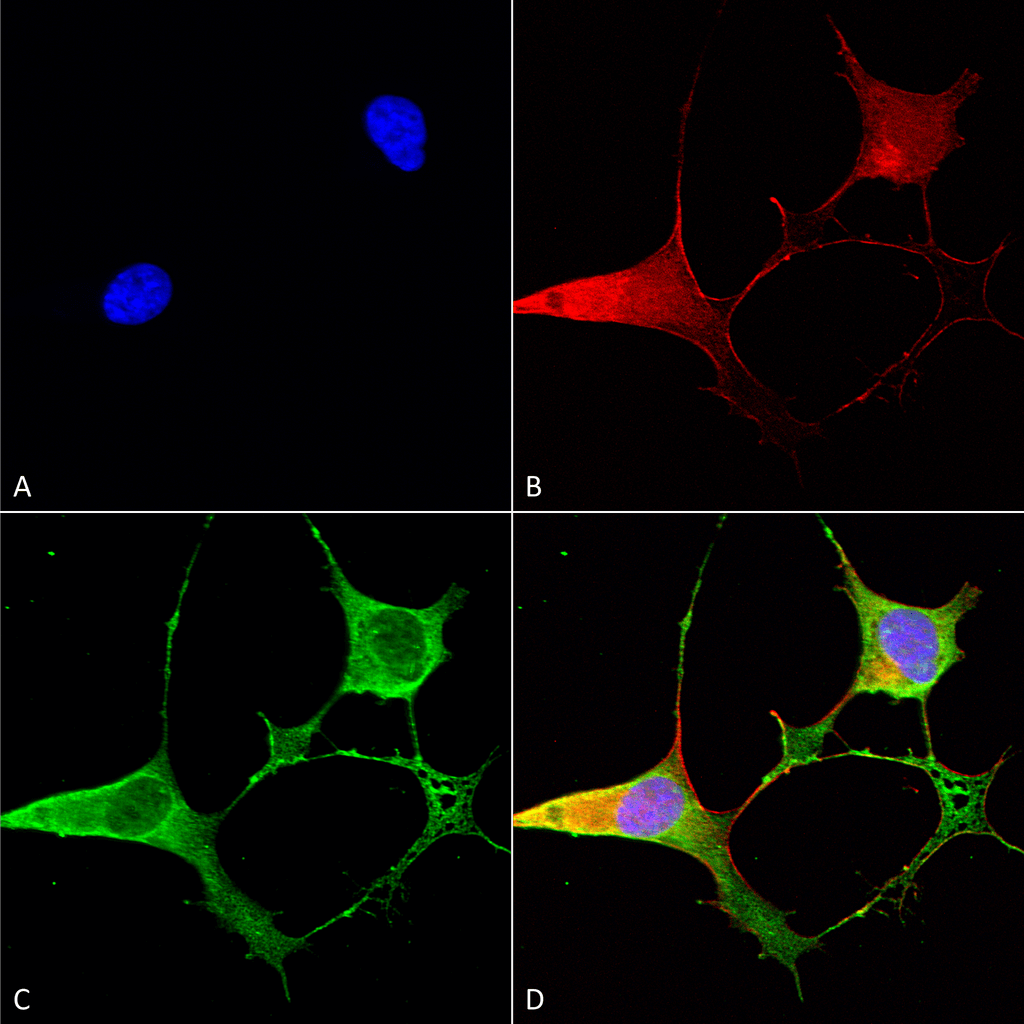

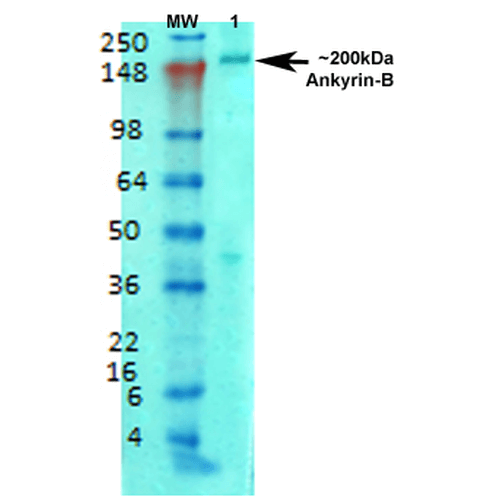
SMC-400
Ankyrin B Antibody, Clone N105/13

Eine Lieferung in diese Region ist nicht möglich.
- SKU:
- SMC-400
- Zusätzliche Namen:
- Ankyrin B, Ankyrin-B, Ankyrin-2, Ankyrin 2, ANK2, ANK-2, Ankyrin nonerythroid, non-erythroid ankyrin, Brain ankyrin
- Anwendung:
- IHC, WB, IF, ICC
- Konzentration:
- 1 mg/ml
- Spezies-Reaktivität:
- Human
- Aufreinigung:
- Protein G Purified
- Lagerbedingungen:
- -20[o]C
- Hersteller:
- StressMarq Biosciences
- Host:
- Mouse
- Reaktivitäten:
- Human, Mouse, Rat
- ABP:
- IMP-GEN-2015-06 < 10% Serum <100ml
- Buffer:
- PBS pH7.4, 50% glycerol, 0.09% sodium azide
- Immunogen:
- Synthetic peptide amino acids 203-496 of human Ankyrin-B
- Klon:
- N105/13 (Formerly sold as S105-13)
- Uniprot:
- Q01484
- Synonyme:
- ANK-2;ankyrin 2, neuronal;ankyrin B;ankyrin-2;ankyrin-2, nonerythrocytic;Ankyrin-B;ankyrin, brain;Brain ankyrin;brank-2;CFAP87;FAP87;LQT4;non-erythroid ankyrin
- Weitere Details:
- Ankyrin-B (ANK2) is a critical member of the ankyrin family of adaptor proteins that link integral membrane proteins to the spectrin-actin cytoskeleton. This structural tethering is essential for maintaining plasma membrane integrity and for the spatial organization of ion channels, transporters, and signaling complexes in neurons. Ankyrin-B specifically interacts with the B Beta-spectrin subunit and a diverse array of membrane proteins, including voltage-gated sodium and calcium channels, Na⁺/Ca²⁺ exchangers, and ATPases. These interactions are vital for regulating neuronal excitability, intracellular calcium homeostasis, and synaptic transmission-processes that are highly sensitive to disruption in neurodegenerative diseases. Recent studies have implicated Ankyrin-B dysfunction in a range of neurological disorders, including Alzheimer's disease, autism spectrum disorders, and cardiac arrhythmias with neurological overlap. Mutations or altered expression of ANK2 can lead to mislocalization of ion channels and impaired axonal transport, contributing to neuronal vulnerability and degeneration. In the context of neurodegeneration, Ankyrin-B's role in maintaining membrane protein organization and cytoskeletal stability positions it as a potential biomarker and therapeutic target. Its involvement in early neuronal dysfunction highlights the importance of cytoskeletal-membrane interactions in the pathogenesis of complex brain disorders. Understanding the molecular mechanisms governed by Ankyrin-B is essential for advancing neuroscience and developing targeted interventions for neurodegenerative diseases.
- Versandbedingungen:
- Blue Ice