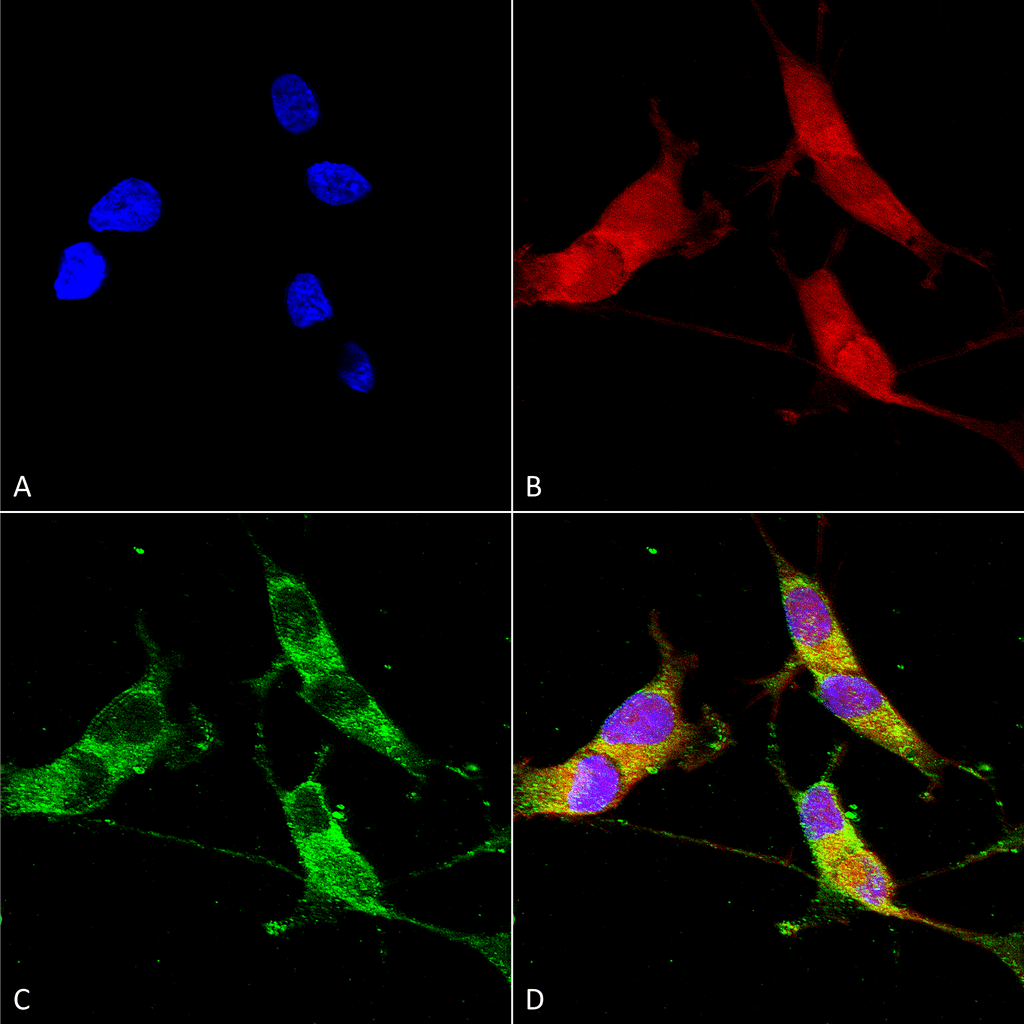
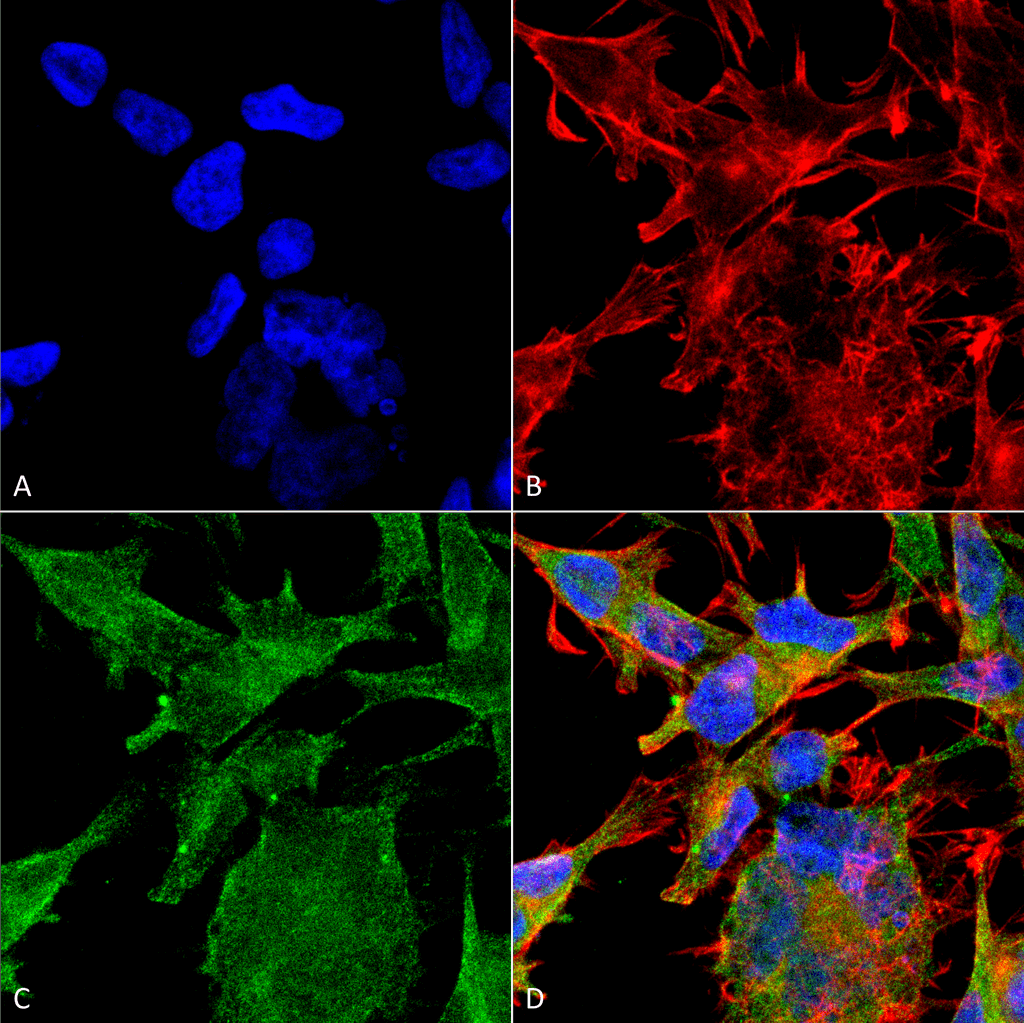
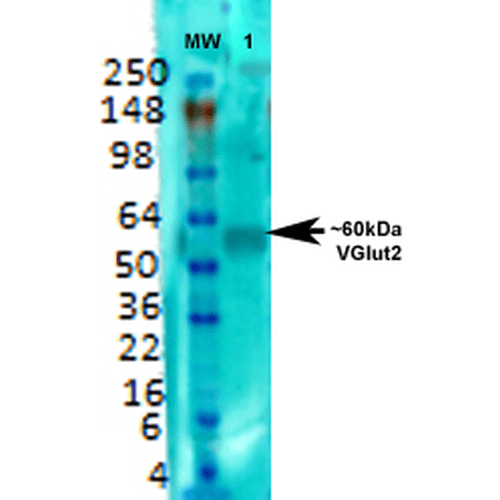
SMC-395
VGLUT2 Antibody, Clone N29/29

Eine Lieferung in diese Region ist nicht möglich.
- SKU:
- SMC-395
- Zusätzliche Namen:
- VGLUT2, VGluT2, VGLU2, SLC17A6, Solute Carrier Family 17 Member 6, Solute Carrier Family 17 (Sodium-Dependent Inorganic Phosphate Cotransporter) Member 6, Solute Carrier Family 17 (Vesicular Glutamate Transporter) Member 6, Vesicular Glutamate Transporter 2, DNPI, Differentiation-Associated Na(+)-Dependent Inorganic Phosphate Cotransporter, Differentiation-Associated Na-Dependent Inorganic Phosphate Cotransporter, Differentiation-Associated BNPI, Sodium-Dependent Inorganic Phosphate
- Anwendung:
- IHC, WB, IF, ICC
- Konzentration:
- 1 mg/ml
- Spezies-Reaktivität:
- Rat
- Aufreinigung:
- Protein G Purified
- Lagerbedingungen:
- -20[o]C
- Hersteller:
- StressMarq Biosciences
- Host:
- Mouse
- Reaktivitäten:
- Human, Mouse, Rat
- ABP:
- IMP-GEN-2015-06 < 10% Serum <100ml
- Buffer:
- PBS pH7.4, 50% glycerol, 0.09% sodium azide
- Immunogen:
- Fusion protein amino acids 501-582 (cytoplasmic C-terminus) of rat VGlut2
- Klon:
- N29/29 (Formerly sold as S29-29)
- Uniprot:
- Q9JI12
- Synonyme:
- differentation-associated Na-dependent inorganic phosphate cotransporter;differentiation-associated BNPI;differentiation-associated Na(+)-dependent inorganic phosphate cotransporter;Dnpi;solute carrier family 17 (sodium-dependent inorganic phosphate cotransporter), member 6;solute carrier family 17 (vesicular glutamate transporter), member 6;Solute carrier family 17 member 6;vesicular glutamate transporter 2;Vglut2
- Weitere Details:
- Vesicular Glutamate Transporter 2 (VGLUT2), encoded by SLC17A6, is an ATP-dependent, chloride-sensitive transporter essential for loading glutamate into synaptic vesicles. Alongside VGLUT1 (BNPI) and VGLUT3, VGLUT2 plays a pivotal role in excitatory neurotransmission. Its expression is regionally distinct and complementary to VGLUT1: while VGLUT1 predominates in telencephalic regions, VGLUT2 is highly expressed in the diencephalon and lower brainstem-areas critical for autonomic control, sensory integration, and motor coordination. VGLUT2 is also expressed in rat pinealocytes and pancreatic A Alpha and B Beta cells, where it responds to glucose levels, suggesting a broader role in neuroendocrine signaling. This transporter is particularly relevant in the context of neurodegenerative diseases, as its dysregulation has been implicated in conditions such as Parkinson's disease, amyotrophic lateral sclerosis (ALS), and Huntington's disease. Its involvement in glutamate homeostasis and excitotoxicity positions VGLUT2 as a key molecular target for understanding disease mechanisms and developing therapeutic interventions. Although VGLUT3 shares approximately 72% sequence homology with VGLUT2 and VGLUT1, each isoform exhibits distinct spatial and functional profiles. VGLUT2's unique distribution and regulatory mechanisms make it a critical focus in neuroscience research, particularly in studies of synaptic plasticity, circuit dysfunction, and neurodegeneration.
- Versandbedingungen:
- Blue Ice