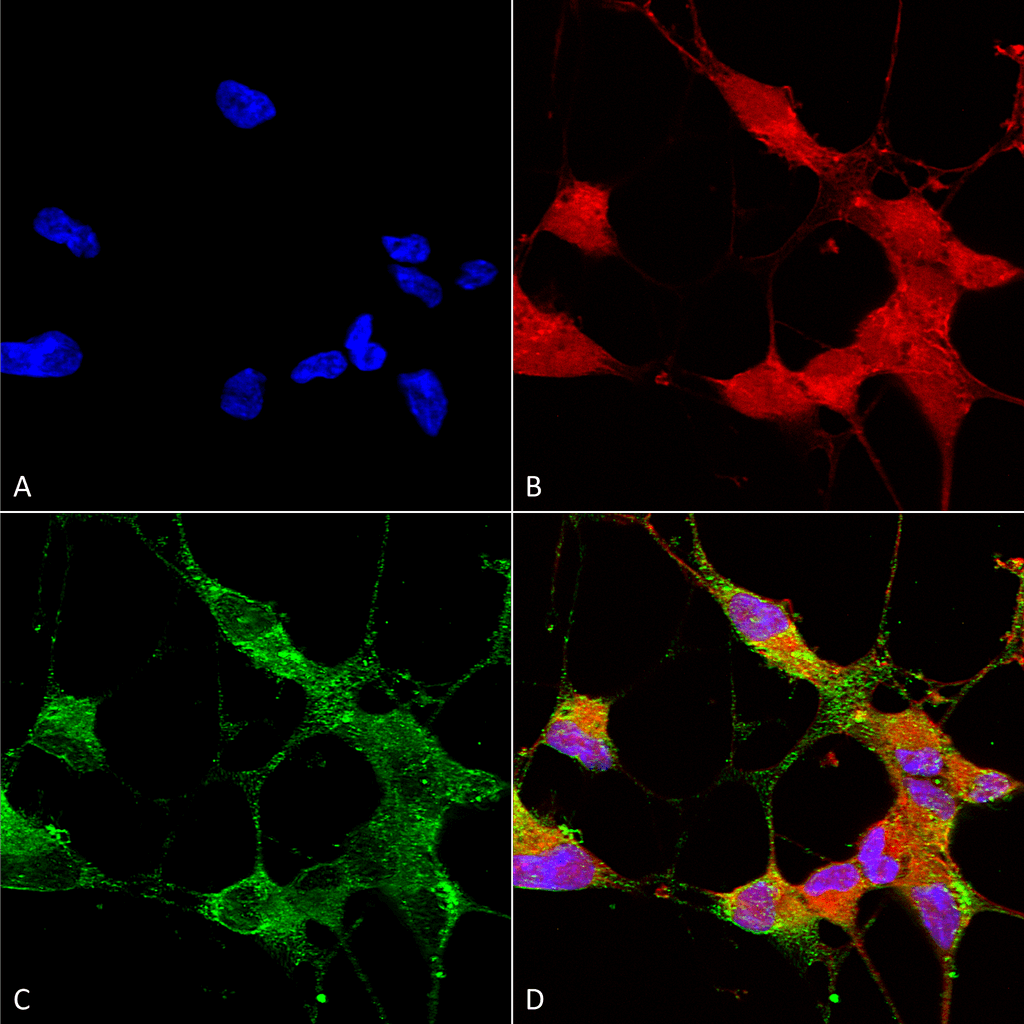
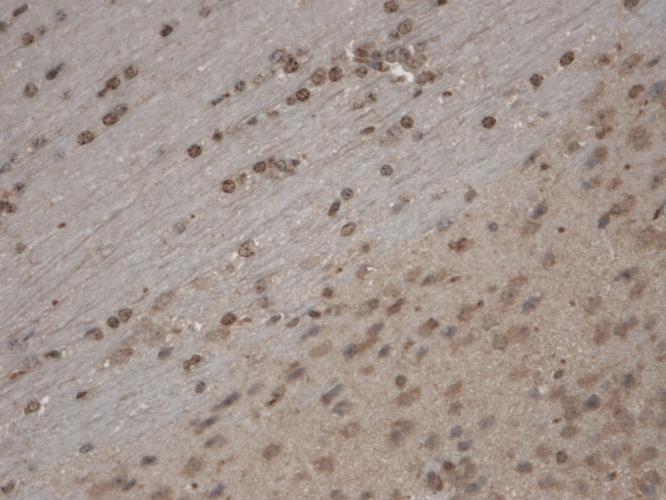
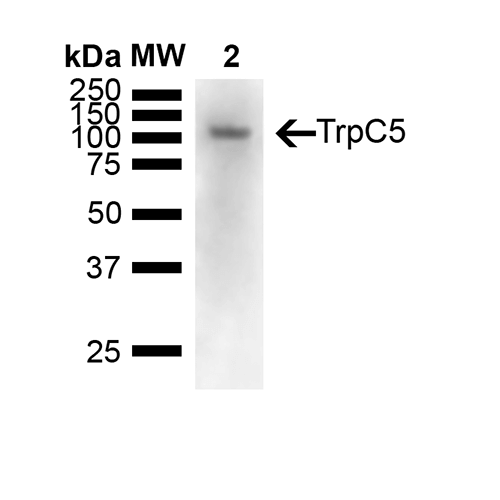
SMC-344
TRPC5 Antibody, Clone N67/15

Eine Lieferung in diese Region ist nicht möglich.
- SKU:
- SMC-344
- Zusätzliche Namen:
- Htrp5, Short transient receptor potential channel 5, TRP5
- Anwendung:
- IHC, WB, IF, ICC, IP, Microarray
- Konzentration:
- 1 mg/ml
- Spezies-Reaktivität:
- Human
- Aufreinigung:
- Protein G Purified
- Lagerbedingungen:
- -20[o]C
- Hersteller:
- StressMarq Biosciences
- Host:
- Mouse
- Reaktivitäten:
- Human, Mouse, Rat
- ABP:
- IMP-GEN-2015-06 < 10% Serum <100ml
- Buffer:
- PBS pH7.4, 50% glycerol, 0.09% sodium azide
- Immunogen:
- Synthetic peptide amino acids 827-845 of human TrpC5 (also known as short transient receptor potential channel 5, and Htrp5)
- Klon:
- N67/15 (Formerly sold as S67-15)
- Uniprot:
- Q9UL62
- Synonyme:
- hTRP5;PPP1R159;protein phosphatase 1, regulatory subunit 159;short transient receptor potential channel 5;transient receptor potential channel 5;transient receptor protein 5;TRP-5;TRP5
- Weitere Details:
- TRPC5 (Transient Receptor Potential Cation Channel Subfamily C Member 5) is a non-selective, calcium-permeable ion channel belonging to the TRPC family of transient receptor potential channels. It forms functional homo- or hetero-multimeric complexes, particularly with TRPC1, and is activated by extracellular reduced thioredoxin-a redox-sensitive mechanism that links TRPC5 to oxidative stress signaling. TRPC5 is highly expressed in the brain, where it contributes to calcium homeostasis, synaptic plasticity, and neuronal excitability. It is involved in key processes such as fear response, dendritic spine remodeling, and neurodevelopment. Recent studies have also implicated TRPC5 in the modulation of anesthetic responses, including sensitivity to agents like chloroform, halothane, and propofol. In the context of neurodegenerative disease, TRPC5's sensitivity to oxidative and inflammatory signals positions it as a potential mediator of neuronal injury. Dysregulated TRPC5 activity may exacerbate calcium overload, mitochondrial dysfunction, and excitotoxicity-hallmarks of conditions such as Alzheimer's disease, Parkinson's disease, and multiple sclerosis. Given its dual role in redox signaling and calcium dynamics, TRPC5 is emerging as a promising target for therapeutic intervention in neurodegenerative and neuroinflammatory disorders.
- Versandbedingungen:
- Blue Ice