K-X51
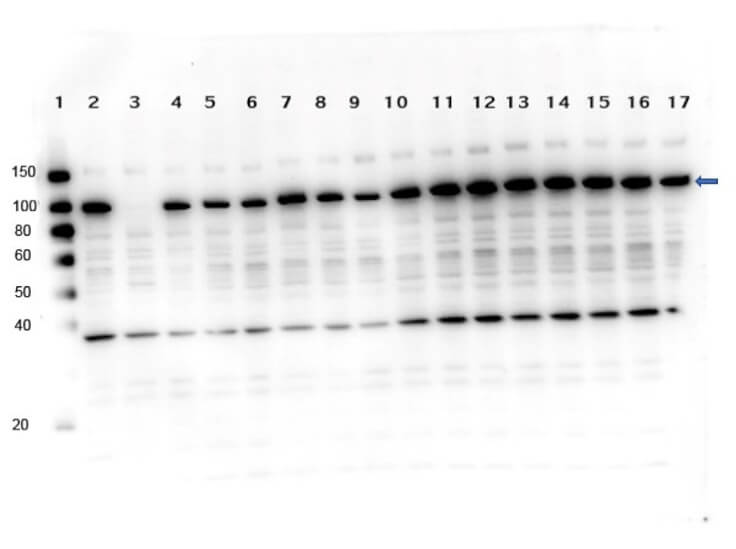
PARP1 (internal) Antibody Combo Pack

Eine Lieferung in diese Region ist nicht möglich.
- SKU:
- K-X51
- Zusätzliche Namen:
- PARP1|Poly [ADP-ribose] polymerase 1, ADP-ribosyltransferase diphtheria toxin-like 1, ARTD1, NAD(+) ADP-ribosyltransferase 1, ADPRT 1, PPOL, primary and secondary antibody pair, Primary+Secondary pair, matched antibody pair
- Anwendung:
- WB
- Physischer Zustand:
- Liquid
- Spezies-Reaktivität:
- Human
- Lagerbedingungen:
- Please refer to datasheet
- Hersteller:
- Rockland Inc
- Host:
- Rabbit
- Reaktivitäten:
- Human
- Buffer:
- 0.02 M Potassium Phosphate, 0.15 M Sodium Chloride
- Immunogen:
- PARP1 (internal) purified antibody was prepared from whole rabbit serum produced by repeated immunizations with c-terminus region of human PARP1 autocatalytic domain recombinant protein. Anti-Rabbit IgG HRP secondary antibody was produced by repeated immunizations in goat with Rabbit IgG whole molecule.
- Formulierung:
- 0.02 M Potassium Phosphate, 0.15 M Sodium Chloride, pH 7.2
- Uniprot:
- P09874
- Synonyme:
- ADP-ribosyltransferase (NAD+; poly (ADP-ribose) polymerase);ADP-ribosyltransferase diphtheria toxin-like 1;ADP-ribosyltransferase NAD(+);ADPRT;ADPRT 1;ADPRT1;ARTD1;DNA ADP-ribosyltransferase PARP1;NAD(+) ADP-ribosyltransferase 1;pADPRT-1;PARP;PARP-1;poly (ADP-ribose) polymerase family, member 1;poly [ADP-ribose] polymerase 1;poly(ADP-ribose) synthetase;poly(ADP-ribosyl)transferase;poly[ADP-ribose] synthase 1;PPOL;protein poly-ADP-ribosyltransferase PARP1
- Weitere Details:
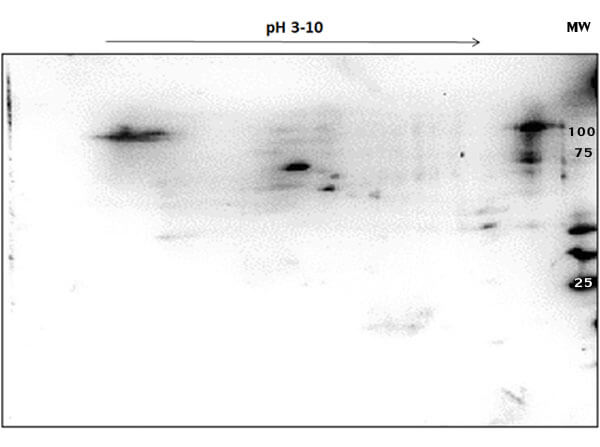
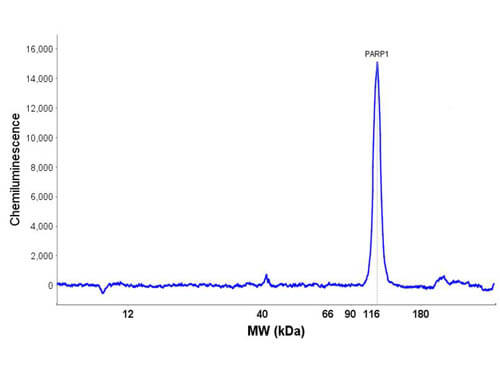
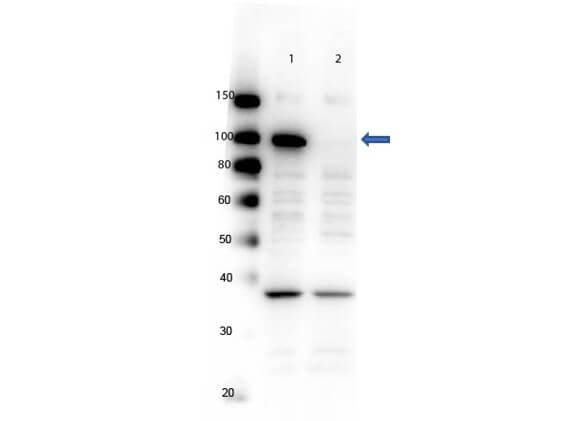
- PARP1 is the primary member of the poly(ADP-ribose) polymerase family, whose function is to signal DNA damage (and to recruit repair proteins) by PARylation. PARP1 is also involved in multiple cell death pathways, including apoptosis, necroptosis, autophagy, and a relatively new pathway termed parthanatos. It has been implicated in a new form of cell death termed parthanatos. PARP1 can also promote tissue survival by shifting the balance of cell death programs between autophagy and necrosis. Clinical studies have shown vulnerability to PARP inhibitors in DNA repair defective cancers. Anti-PARP1 (internal) antibody is useful for researchers interested in cellular processes including DNA damage, transcriptional control, and stem cell identity research.
- Versandbedingungen:
- Dry Ice