600-401-Y30
APBA2 Antibody

Eine Lieferung in diese Region ist nicht möglich.
- SKU:
- 600-401-Y30
- Zusätzliche Namen:
- APBA2|APBA2 Antibody, X11L, MINT2, LIN-10, HsT16821, X11-BETA, D15S1518E, MGC,14091, X11L, Amyloid beta A4 precursor protein-binding family A member 2, Adapter protein X11beta, Mint-2
- Anwendung:
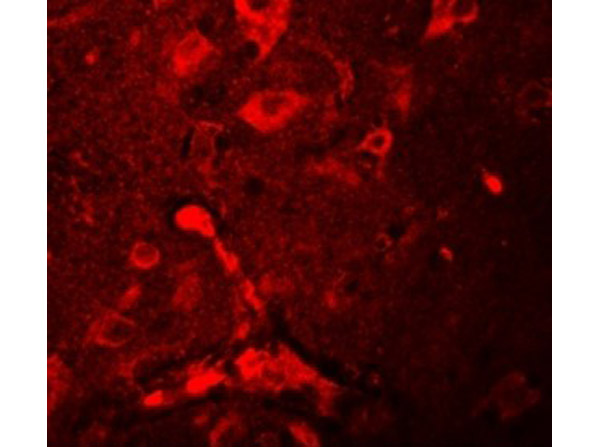
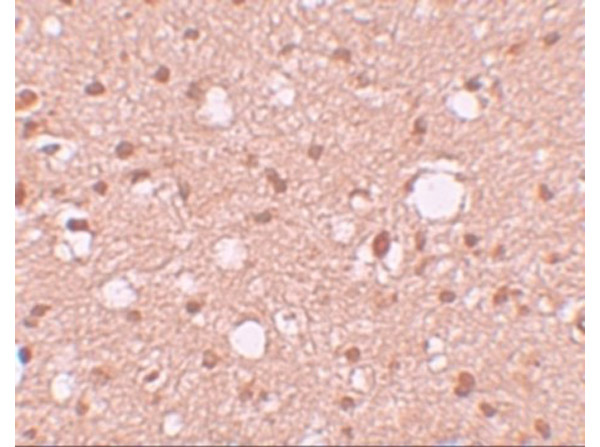
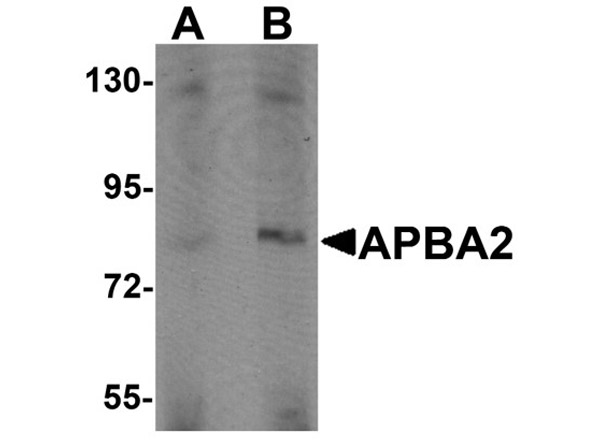
- ELISA, IHC, WB, IF
- Konzentration:
- 1 mg/ml
- Physischer Zustand:
- Liquid
- Spezies-Reaktivität:
- Human
- Lagerbedingungen:
- -20[o]C aliquoted. Aliquot. Avoid freeze/thaw cycles., 2-8[o]C diluted. Aliquot. Avoid freeze/thaw cycles.
- Hersteller:
- Rockland Inc
- Host:
- Rabbit
- Reaktivitäten:
- Human
- Buffer:
- 0.01 M Sodium Phosphate, 0.25 M Sodium Chloride
- Immunogen:
- Anti-APBA2 antibody was prepared from whole rabbit serum produced by repeated immunizations with an 18 amino acid synthetic peptide near the internal region of human APBA2.
- Formulierung:
- 0.01 M Sodium Phosphate, 0.25 M Sodium Chloride, pH 7.2
- Uniprot:
- Q99767
- Synonyme:
- adapter protein X11beta;amyloid beta (A4) precursor protein-binding, family A, member 2 (X11-like);amyloid-beta A4 precursor protein-binding family A member 2;D15S1518E;HsT16821;LIN-10;MGC:14091;mint-2;MINT2;neuron-specific X11L protein;neuronal munc18-1-interacting protein 2;phosphotyrosine-binding/-interacting domain (PTB)-bearing protein;X11-BETA;X11-like protein;X11L
- Weitere Details:
- APBA2, a member of the X11 protein family, is a phosphotyrosine-binding domain protein and is a neuronal adapter protein that interacts with amyloid precursor protein (APP) and neuritic plaques in the brains of patients with Alzheimer's disease. It stabilizes APP and inhibits production of proteolytic APP fragments including the Abeta peptide that is deposited in the brains of Alzheimer's disease patients. APBA2 is believed to be involved in signal transduction processes and is also regarded as a putative vesicular trafficking protein in the brain that can form a complex with the potential to couple synaptic vesicle exocytosis to neuronal cell adhesion. Recent reports suggest that it may also be a candidate gene for autism.
- Versandbedingungen:
- Dry Ice