600-401-CD1
KAI1 Antibody

Eine Lieferung in diese Region ist nicht möglich.
- SKU:
- 600-401-CD1
- Zusätzliche Namen:
- CD82|KAI1 Antibody, R2, 4F9, C33, IA4, ST6, GR15, KAI1, SAR2, TSPAN27, CD82 antigen, C33 antigen, Tspan-27
- Anwendung:
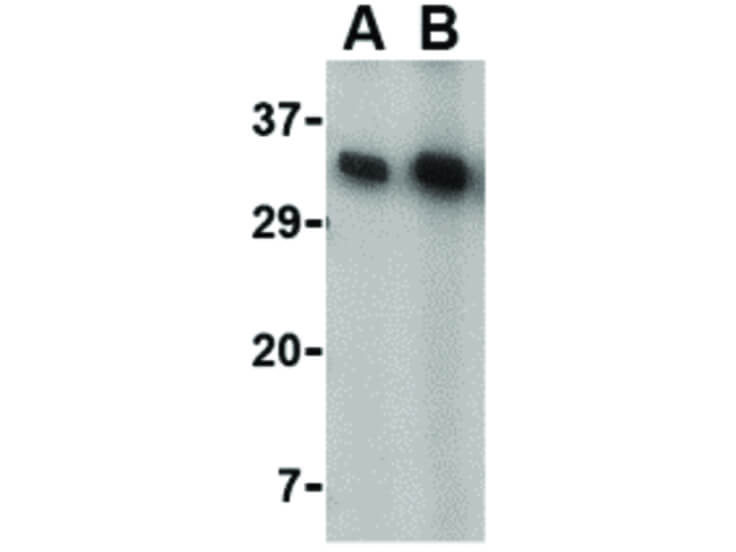
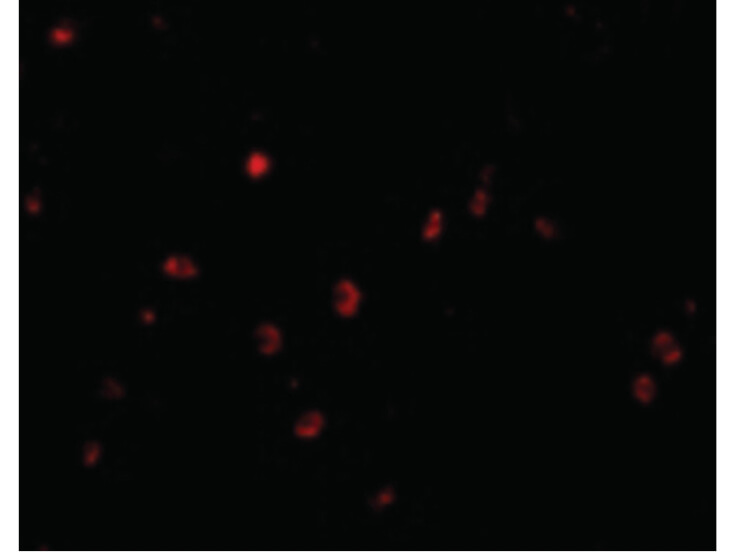
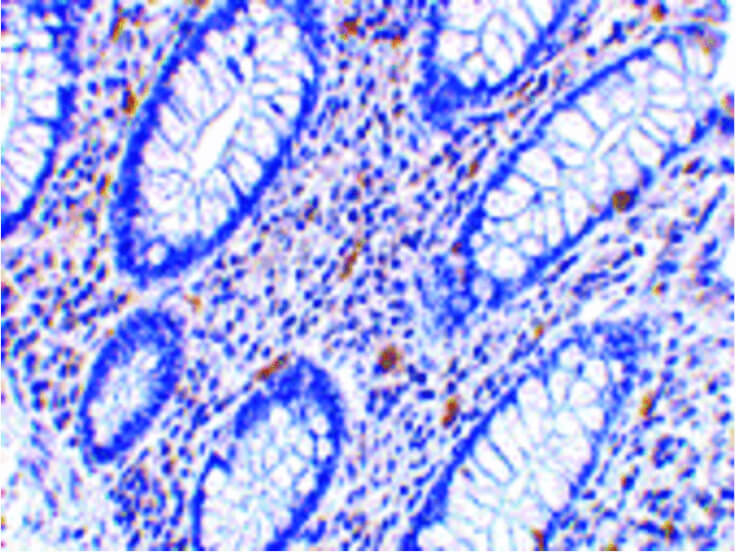
- ELISA, IHC, WB, IF
- Konzentration:
- 1 mg/ml
- Physischer Zustand:
- Liquid
- Spezies-Reaktivität:
- Human
- Lagerbedingungen:
- -20[o]C aliquoted. Aliquot. Avoid freeze/thaw cycles., 2-8[o]C diluted. Aliquot. Avoid freeze/thaw cycles.
- Hersteller:
- Rockland Inc
- Host:
- Rabbit
- Reaktivitäten:
- Human, Mouse, Rat
- Buffer:
- 0.01 M Sodium Phosphate, 0.25 M Sodium Chloride
- Immunogen:
- Anti-KAI1 antibody was prepared from whole rabbit serum produced by repeated immunizations with a 15 amino acid synthetic peptide from near the C-terminus of human KAI1.
- Formulierung:
- 0.01 M Sodium Phosphate, 0.25 M Sodium Chloride, pH 7.2
- Uniprot:
- P27701
- Synonyme:
- 4F9;C33;C33 antigen;CD82 antigen;GR15;IA4;inducible membrane protein R2;KAI1;kangai 1 (suppression of tumorigenicity 6, prostate; CD82 antigen (R2 leukocyte antigen, antigen detected by monoclonal and antibody IA4));metastasis suppressor Kangai-1;R2;SAR2;ST6;Suppressor of tumorigenicity 6 protein;tetraspanin-27;tspan-27;TSPAN27
- Weitere Details:
- KAI1 was initially identified from a T-cell activation study as a four-transmembrane protein that plays an accessory role in T-cell activation, and was later determined to act as a cancer metastasis suppressor gene. This protein is ubiquitously expressed at moderate to high levels in most tissues, but its expression is downregulated during tumor progression. The loss of KAI1 and p53 is associated with poor survival for prostate and other cancer patients. Recently, KAI1 was found to interact with DARC, the Duffy antigen for chemokines using a yeast two hybrid screen. It is thought that tumor cells dislodged from the primary tumor and expressing KAI1 interact with DARC proteins expressed on vascular cells, transmitting a senescent signal to the tumor cells, while tumor cells that have lost KAI1 expression can proliferate and potentially give rise to metastases. At least two isoforms of KAI1 are known to exist.
- Versandbedingungen:
- Dry Ice