600-401-BQ1
HAP1 Antibody

Eine Lieferung in diese Region ist nicht möglich.
- SKU:
- 600-401-BQ1
- Zusätzliche Namen:
- HAP1|HAP1 Antibody, HLP, HAP2, HIP5, hHLP1, HLP1, Huntingtin-associated protein 1, Neuroan 1, HAP-1
- Anwendung:
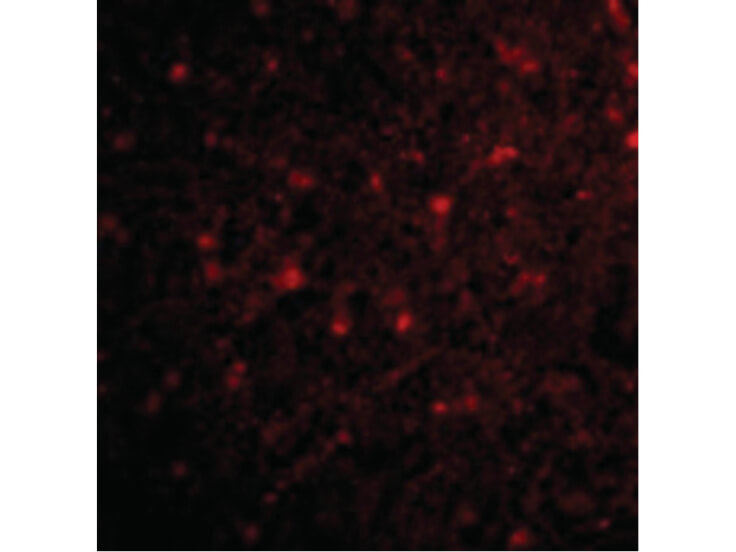
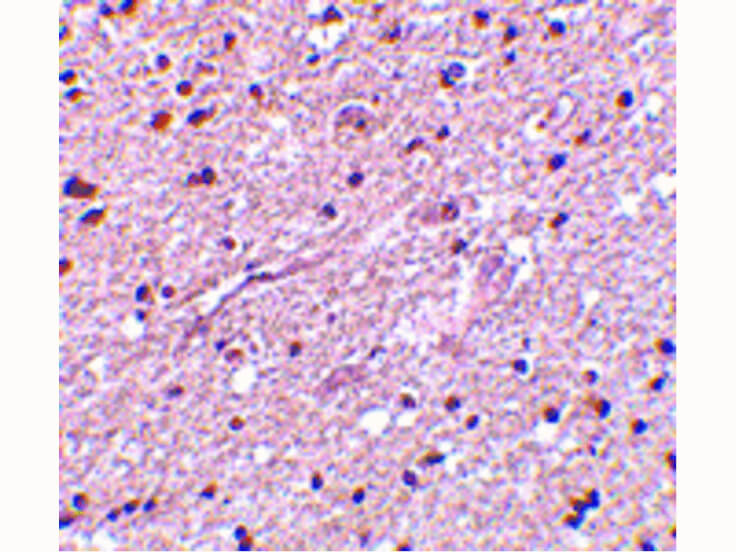
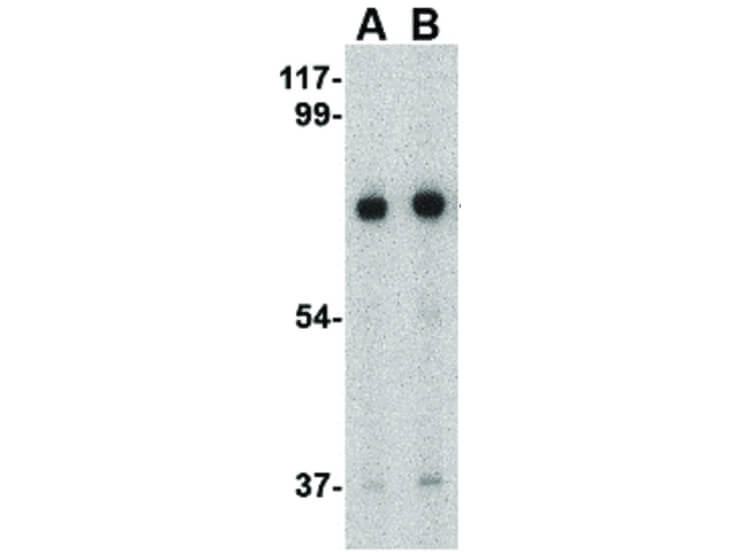
- ELISA, IHC, WB, IF
- Konzentration:
- 1 mg/ml
- Physischer Zustand:
- Liquid
- Spezies-Reaktivität:
- Human
- Lagerbedingungen:
- -20[o]C aliquoted. Aliquot. Avoid freeze/thaw cycles., 2-8[o]C diluted. Aliquot. Avoid freeze/thaw cycles.
- Hersteller:
- Rockland Inc
- Host:
- Rabbit
- Reaktivitäten:
- Human, Mouse, Rat
- Buffer:
- 0.01 M Sodium Phosphate, 0.25 M Sodium Chloride
- Immunogen:
- Anti-HAP1 antibody was prepared from whole rabbit serum produced by repeated immunizations with a 19 amino acid synthetic peptide from near the internal region of human HAP1.
- Formulierung:
- 0.01 M Sodium Phosphate, 0.25 M Sodium Chloride, pH 7.2
- Uniprot:
- P54257
- Synonyme:
- epididymis secretory sperm binding protein;HAP-1;HAP2;hHLP1;HIP5;HLP;huntingtin-associated protein 1;huntingtin-associated protein 2;neuroan 1
- Weitere Details:
- Huntington's disease (HD), a neurodegenerative disorder characterized by loss of striatal neurons, is caused by an expansion of a polyglutamine tract in the HD protein huntingtin. HAP1 was initially identified through a two-hybrid library screening; the binding of HAP1 to huntingtin correlated with the expansion of the polyglutamine tract. HAP1 also interacts with two cytoskeletal proteins (dynactin and pericentriolar autoantigen protein 1), suggesting that HAP1 may play a role in vesicular trafficking or organelle transport. HAP1 is also involved with the huntingtin-enhanced BDNF transport along the cellular microtubules. Attenuation of this process led to the loss of neurotrophic support and neuronal toxicity, which suggests that loss of this function might contribute to pathogenesis. Several alternatively spliced isoforms have been described for HAP1.
- Versandbedingungen:
- Dry Ice