600-401-AG0
CCL4 Antibody

Eine Lieferung in diese Region ist nicht möglich.
- SKU:
- 600-401-AG0
- Zusätzliche Namen:
- CCL4|CCL4 Antibody, ACT2, G-26, HC21, LAG1, LAG-1, MIP1B, SCYA2, SCYA4, MIP1B1, AT744.1, MIP-1-beta, C-C motif chemokine 4, G-26 T-lymphocyte-secreted protein
- Anwendung:
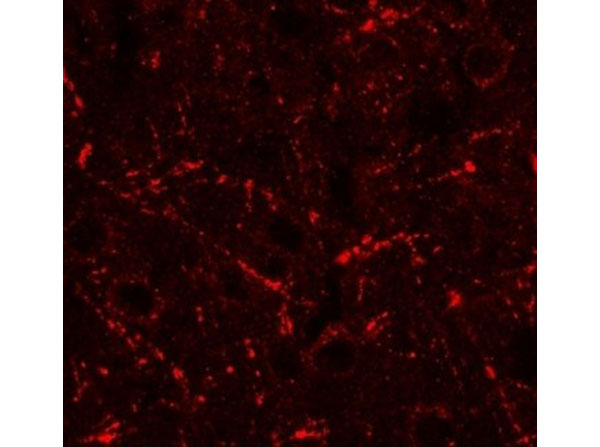
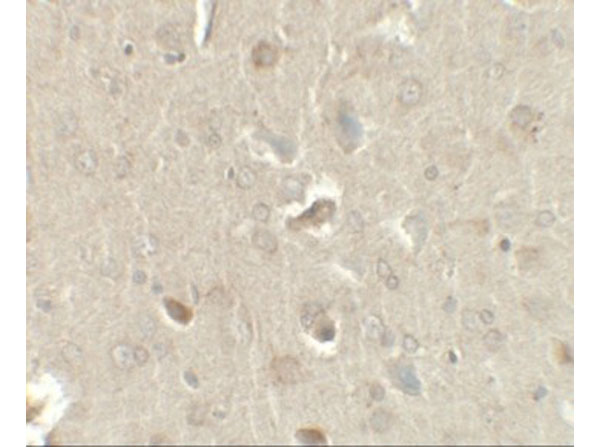
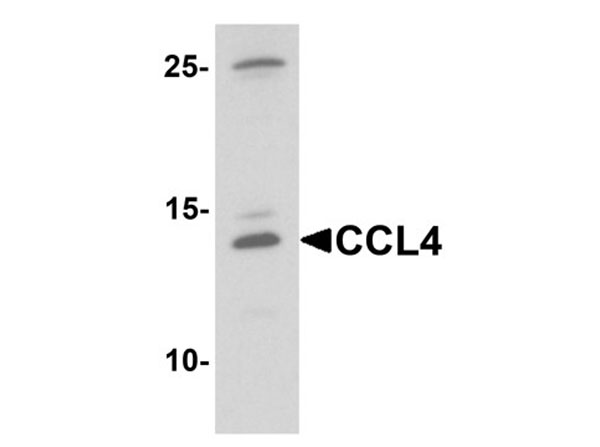
- ELISA, IHC, WB, IF
- Konzentration:
- 1 mg/ml
- Physischer Zustand:
- Liquid
- Spezies-Reaktivität:
- Human
- Lagerbedingungen:
- -20[o]C aliquoted. Aliquot. Avoid freeze/thaw cycles., 2-8[o]C diluted. Aliquot. Avoid freeze/thaw cycles.
- Hersteller:
- Rockland Inc
- Host:
- Rabbit
- Reaktivitäten:
- Human, Mouse, Rat
- Buffer:
- 0.01 M Sodium Phosphate, 0.25 M Sodium Chloride
- Immunogen:
- Anti- CCL4 antibody was prepared from whole rabbit serum produced by repeated immunizations with a 15 amino acid peptide near the internal region of human CCL4.
- Formulierung:
- 0.01 M Sodium Phosphate, 0.25 M Sodium Chloride, pH 7.2
- Uniprot:
- P13236
- Synonyme:
- ACT2;AT744.1;AT744.2;C-C motif chemokine 4;C-C motif chemokine 4-like;CC chemokine ligand 4L1;CCL4L;chemokine (C-C motif) ligand 4;chemokine (C-C motif) ligand 4-like 1, telomeric;G-26;G-26 T-lymphocyte-secreted protein;HC21;LAG-1;LAG1;lymphocyte activation gene 1 protein;macrophage inflammatory protein 1-beta;macrophage inflammatory protein-1b2;MIP-1-beta;MIP-1-beta(1-69);MIP1B;MIP1B1;Monocyte adherence-induced protein 5-alpha;PAT 744;Protein H400;SCYA2;SCYA4;SCYA4L;SCYA4L1;SCYA4L2;secreted protein G-26;SIS-gamma;small inducible cytokine A4 (homologous to mouse Mip-1b);small inducible cytokine A4-like;Small-inducible cytokine A4;Small-inducible cytokine A4-like;T-cell activation protein 2
- Weitere Details:
- CCL4, also known as macrophage inflammatory protein 1-beta (MIP1B), belongs to the intercrine beta (chemokine CC) family. Both CCL4 and the related protein CCL3 participate in the host response to invading bacterial, viral, parasite and fungal pathogens by regulating the trafficking and activation state of selected subgroups of inflammatory cells. While both CCL4 and CCL3 exert similar effects on monocytes, their effect on lymphocytes differ; with CCL4 selectively attracting CD4+ lymphocytes and CCL3 selectively attracting CD8+ lymphocytes. Additionally, both have been shown to be potent chemoattractants for B cells, eosinophils and dendritic cells. The processed form of CCL4 can induce down-modulation of surface expression of the chemokine receptor CCR5, thus inhibiting the CCR5-mediated entry of HIV-1 in T cells.
- Versandbedingungen:
- Dry Ice