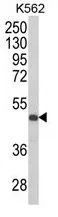
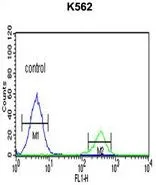
GTX81103
KIR3DS1 antibody, C-term

Eine Lieferung in diese Region ist nicht möglich.
- SKU:
- GTX81103
- Zusätzliche Namen:
- killer cell immunoglobulin like receptor, three Ig domains and short cytoplasmic tail 1 , CD158E2 , KIR-123FM , KIR-G1 , NKAT-10 , NKAT10
- Anwendung:
- Flow Cytometry, WB
- Physischer Zustand:
- Liquid
- Spezies-Reaktivität:
- Human
- Aufreinigung:
- Affinity Purified; Protein A Purified
- Lagerbedingungen:
- -20[o]C Aliquot. Avoid freeze/thaw cycles. Store undiluted., 2-8[o]C Aliquot. Avoid freeze/thaw cycles. Store undiluted., -20[o]C/-70[o]C Aliquot. Avoid freeze/thaw cycles. Store undiluted.
- Hersteller:
- Genetex
- Host:
- Rabbit
- Reaktivitäten:
- Human
- Buffer:
- PBS, 0.09% Sodium azide.
- Immunogen:
- KLH conjugated synthetic peptide between 361-387 amino acids from the C-terminal region of human KIR3DS1.
- Uniprot:
- Q14943
- Synonyme:
- CD158E2;killer cell immunoglobulin-like receptor 3DS1;killer cell immunoglobulin-like receptor KIR3DS1;killer cell immunoglobulin-like receptor, three domains, short cytoplasmic tail, 1;KIR-123FM;KIR-G1;MHC class I NK cell receptor;natural killer-associated transcript 10;NKAT-10;NKAT10
- Weitere Details:
- Killer cell immunoglobulin-like receptors (KIRs) are transmembrane glycoproteins expressed by natural killer cells and subsets of T cells. The KIR genes are polymorphic and highly homologous and they are found in a cluster on chromosome 19q13.4 within the 1 Mb leukocyte receptor complex (LRC). The gene content of the KIR gene cluster varies among haplotypes, although several "framework" genes are found in all haplotypes (KIR3DL3, KIR3DP1, KIR3DL4, KIR3DL2). The KIR proteins are classified by the number of extracellular immunoglobulin domains (2D or 3D) and by whether they have a long (L) or short (S) cytoplasmic domain. KIR proteins with the long cytoplasmic domain transduce inhibitory signals upon ligand binding via an immune tyrosine-based inhibitory motif (ITIM), while KIR proteins with the short cytoplasmic domain lack the ITIM motif and instead associate with the TYRO protein tyrosine kinase binding protein to transduce activating signals. The ligands for several KIR proteins are subsets of HLA class I molecules; thus, KIR proteins are thought to play an important role in regulation of the immune response. Alternatively spliced transcript variants encoding different isoforms have been found for this gene. [provided by RefSeq, Aug 2013]
- Versandbedingungen:
- Blue Ice