GTX78143
ADAMTS4 antibody

Eine Lieferung in diese Region ist nicht möglich.
- SKU:
- GTX78143
- Zusätzliche Namen:
- ADAM metallopeptidase with thrombospondin type 1 motif 4 , ADAMTS2 , ADAMTS4 , ADMP1 , ADAMTS-4
- Anwendung:
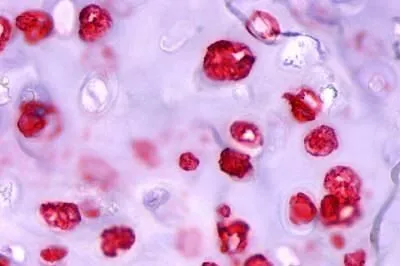
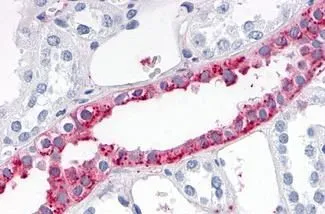
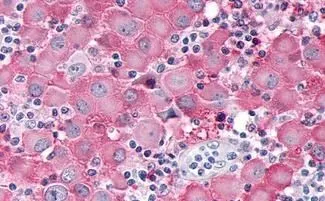
- IHC-P
- Konzentration:
- 1 mg/ml
- Physischer Zustand:
- Liquid
- Spezies-Reaktivität:
- Human
- Aufreinigung:
- Affinity Purified
- Lagerbedingungen:
- -20[o]C Aliquot. Avoid freeze/thaw cycles. Store undiluted., 2-8[o]C Aliquot. Avoid freeze/thaw cycles. Store undiluted., -20[o]C/-70[o]C Aliquot. Avoid freeze/thaw cycles. Store undiluted.
- Hersteller:
- Genetex
- Host:
- Rabbit
- Reaktivitäten:
- Bovine, Canine, Hamster, Human, Mouse, Equine, Guinea Pig
- Buffer:
- PBS, 0.1% Sodium azide.
- Immunogen:
- Synthetic 15 amino acid peptide from Disintegrin-like domain of human ADAMTS4.
- Uniprot:
- O75173
- Synonyme:
- A disintegrin and metalloproteinase with thrombospondin motifs 4;a disintegrin-like and metalloprotease (reprolysin type) with thrombospondin type 1 motif, 4;ADAM-TS 4;ADAM-TS4;ADAMTS-2;ADAMTS-4;ADMP-1;aggrecanase-1;epididymis secretory sperm binding protein
- Weitere Details:
- This gene encodes a member of the ADAMTS (a disintegrin and metalloproteinase with thrombospondin motifs) protein family. Members of this family share several distinct protein modules, including a propeptide region, a metalloproteinase domain, a disintegrin-like domain, and a thrombospondin type 1 (TS) motif. Individual members of this family differ in the number of C-terminal TS motifs, and some have unique C-terminal domains. The enzyme encoded by this gene lacks a C-terminal TS motif. The encoded preproprotein is proteolytically processed to generate the mature protease. This protease is responsible for the degradation of aggrecan, a major proteoglycan of cartilage, and brevican, a brain-specific extracellular matrix protein. The expression of this gene is upregulated in arthritic disease and this may contribute to disease progression through the degradation of aggrecan. Alternative splicing results in multiple transcript variants, at least one of which encodes an isoform that is proteolytically processed. [provided by RefSeq, Feb 2016]
- Versandbedingungen:
- Blue Ice