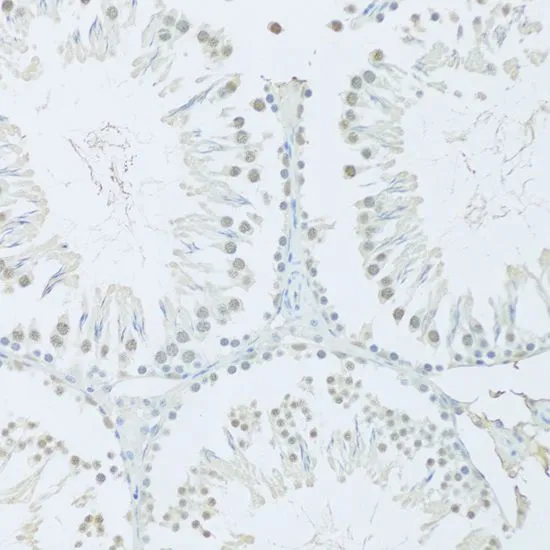
GTX55623
FIP1L1 antibody

Eine Lieferung in diese Region ist nicht möglich.
- SKU:
- GTX55623
- Zusätzliche Namen:
- factor interacting with PAPOLA and CPSF1 , FIP1 , Rhe , hFip1
- Anwendung:
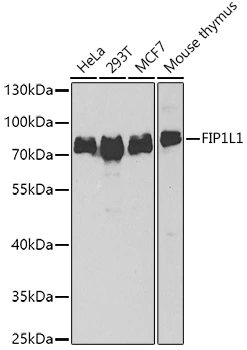
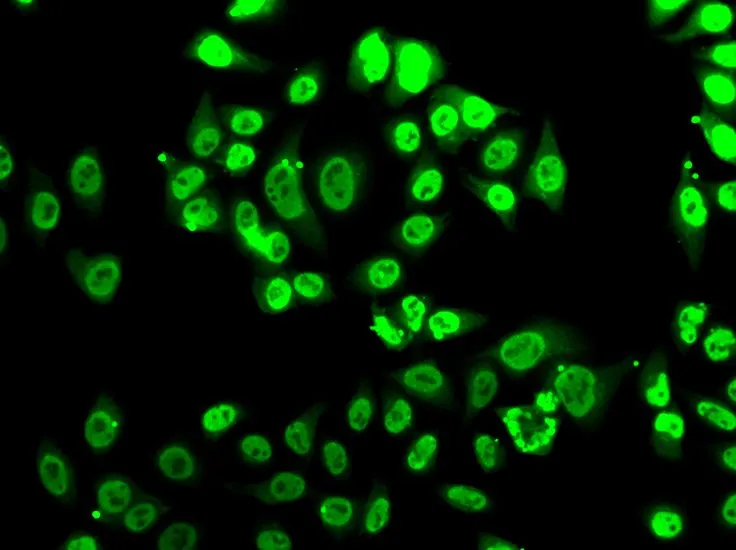
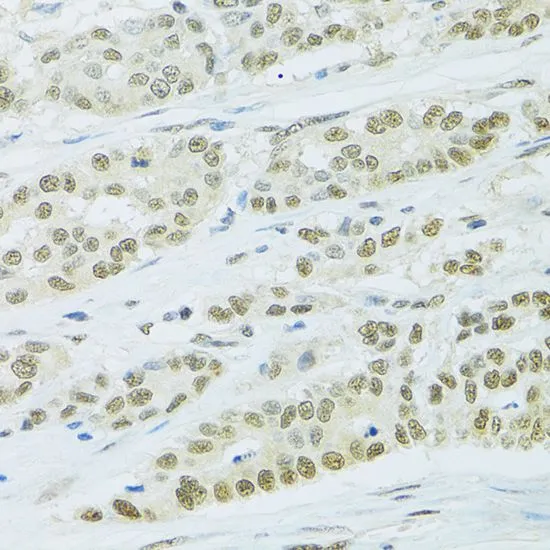
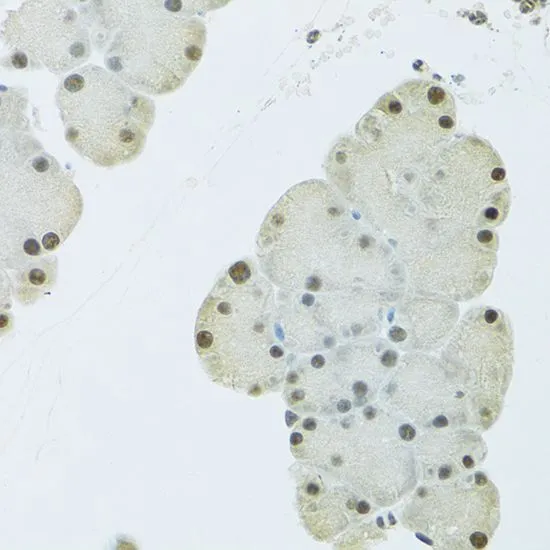
- WB, IHC-P, IF, ICC
- Physischer Zustand:
- Liquid
- Spezies-Reaktivität:
- Human
- Aufreinigung:
- Affinity Purified
- Lagerbedingungen:
- -20[o]C Aliquot. Avoid freeze/thaw cycles. Store undiluted., 2-8[o]C Aliquot. Avoid freeze/thaw cycles. Store undiluted., -20[o]C/-70[o]C Aliquot. Avoid freeze/thaw cycles. Store undiluted.
- Hersteller:
- Genetex
- Host:
- Rabbit
- Reaktivitäten:
- Human, Mouse, Rat
- Buffer:
- PBS, 50% Glycerol, 0.05% ProClin 300.
- Immunogen:
- Recombinant fusion protein containing a sequence corresponding to amino acids 1-300 of human FIP1L1 (NP_001128409.1).
- Uniprot:
- Q6UN15
- Synonyme:
- factor interacting with PAP;FIP1;FIP1 like 1;FIP1-like 1 protein;FIP1L1 cleavage and polyadenylation specific factor subunit;hFip1;pre-mRNA 3'-end-processing factor FIP1;rearranged in hypereosinophilia;Rhe
- Weitere Details:
- This gene encodes a subunit of the CPSF (cleavage and polyadenylation specificity factor) complex that polyadenylates the 3' end of mRNA precursors. This gene, the homolog of yeast Fip1 (factor interacting with PAP), binds to U-rich sequences of pre-mRNA and stimulates poly(A) polymerase activity. Its N-terminus contains a PAP-binding site and its C-terminus an RNA-binding domain. An interstitial chromosomal deletion on 4q12 creates an in-frame fusion of human genes FIP1L1 and PDGFRA (platelet-derived growth factor receptor, alpha). The FIP1L1-PDGFRA fusion gene encodes a constitutively activated tyrosine kinase that joins the first 233 amino acids of FIP1L1 to the last 523 amino acids of PDGFRA. This gene fusion and chromosomal deletion is the cause of some forms of idiopathic hypereosinophilic syndrome (HES). This syndrome, recently reclassified as chronic eosinophilic leukemia (CEL), is responsive to treatment with tyrosine kinase inhibitors. Alternative splicing results in multiple transcript variants encoding distinct isoforms. [provided by RefSeq, Oct 2008]
- Versandbedingungen:
- Blue Ice