GTX23450
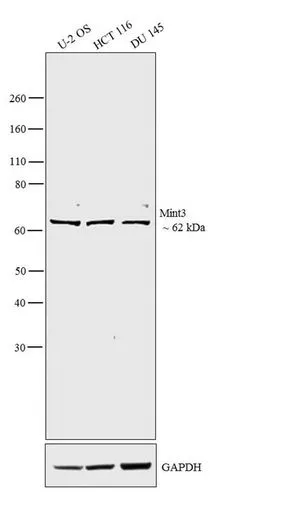
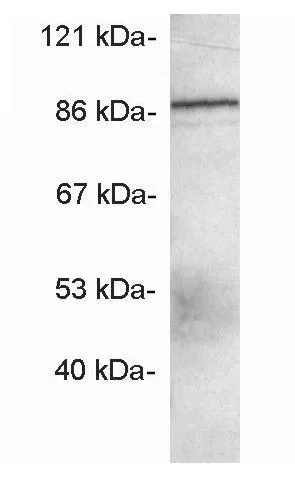
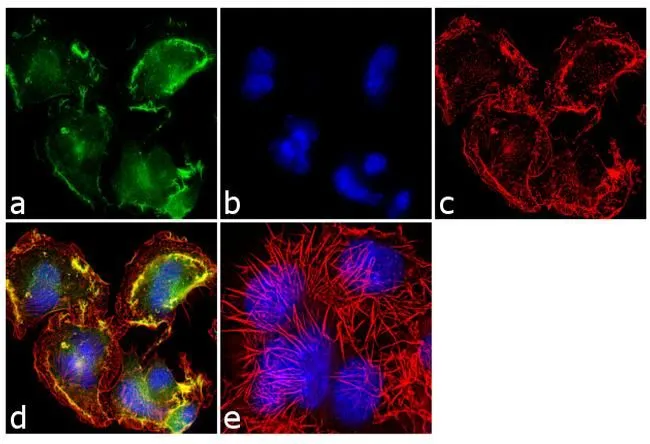
Mint3 antibody

Eine Lieferung in diese Region ist nicht möglich.
- SKU:
- GTX23450
- Zusätzliche Namen:
- amyloid beta (A4) precursor protein-binding, family A, member 3 , AW208791 , Mint-3 , X11gamma , lin-10 , mint3
- Anwendung:
- Flow Cytometry, IHC, WB, IF, ICC
- Konzentration:
- 1 mg/ml
- Physischer Zustand:
- Liquid
- Spezies-Reaktivität:
- Rat
- Aufreinigung:
- Affinity Purified
- Lagerbedingungen:
- -20[o]C Aliquot. Avoid freeze/thaw cycles. Store undiluted., 2-8[o]C Aliquot. Avoid freeze/thaw cycles. Store undiluted., -20[o]C/-70[o]C Aliquot. Avoid freeze/thaw cycles. Store undiluted.
- Hersteller:
- Genetex
- Host:
- Rabbit
- Reaktivitäten:
- Human, Mouse, Rat
- Buffer:
- PBS, 0.1% BSA, 0.05% Sodium azide.
- Immunogen:
- Synthetic peptide corresponding to residues M(1) E F L P E P Q H P P G P P T M D L E(19) of rat Mint3.
- Uniprot:
- O88888
- Synonyme:
- adapter protein X11gamma;amyloid-beta A4 precursor protein-binding family A member 3;AW208791;lin;lin-10;Mint;Mint 3;Mint-3;mint3;neuron-specific X11L2 protein;neuronal munc18-1-interacting protein 3;X11gam;X11gamma
- Weitere Details:
- The munc-18 interacting protein (Mint) protein family is a group of evolutionarily conserved adaptor proteins that function in membrane transport and organization. In mammals, there exist three mint isoforms, Mint1, 2, and 3. Although there is little amino acid sequence conservation in the amino-terminal half, the carboxy-terminal half of these proteins is highly conserved. Within this conserved portion there exists a phosphotyrosine-binding (PTB) and a PSD-95/DLG-A/ZO-1 (PDZ) domain, which function as protein interaction modules. Mint1 and 2 appear to be expressed exclusively in the brain and are found to bind to Munc18, an essential component of the synaptic vesicle fusion machinery. Mint3 is ubiquitously expressed in all tissues and is expressed at the lowest levels in the brain and testis. Studies show that mint3 does not interact with munc-18. Mint3 has been found to interact with the Alzheimer's Disease-related amyloid precursor protein (APP) and does so through its PTB and PDZ domains. It has been suggested that mint3 links APP to other transport machinery components, thereby regulating it transport, endocytosis, and metabolism. Abnormal APP metabolism has been shown to be the cause of an early-onset type of Alzheimer's disease.
- Versandbedingungen:
- Blue Ice