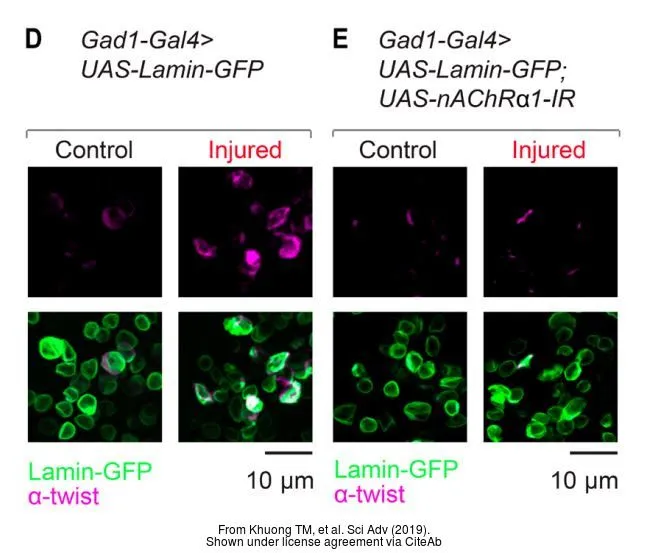
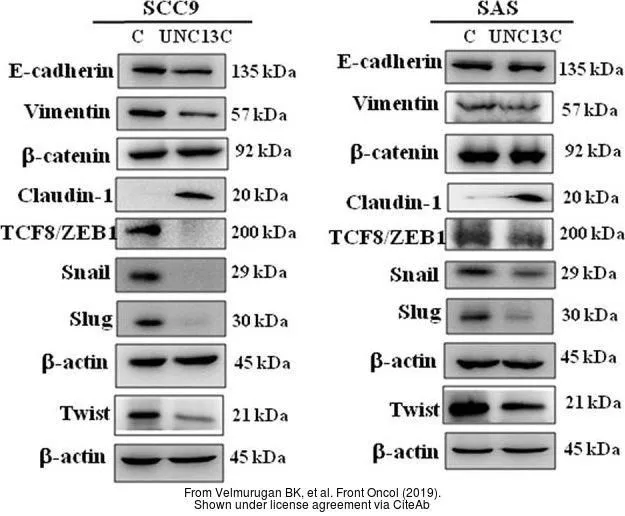
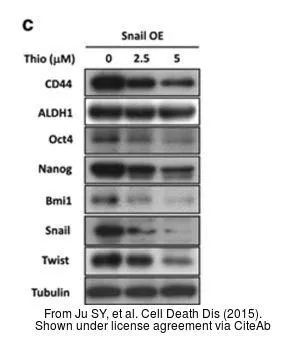
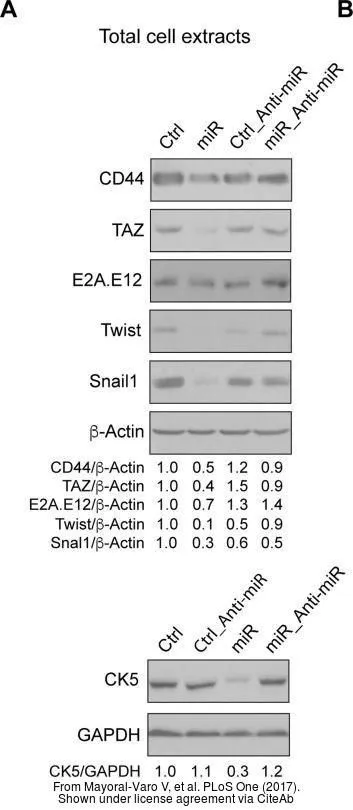
GTX127310
Twist1/2 antibody

Eine Lieferung in diese Region ist nicht möglich.
- SKU:
- GTX127310
- Zusätzliche Namen:
- ACS3 antibody , B-HLH DNA binding protein antibody , BPES2 antibody , BPES3 antibody , CRS1 antibody , DERMO1 antibody , H-twist antibody , MGC117334 antibody , SCS antibody , TWIST antibody , TWIST homolog of drosophila antibody , TWIST1 antibody , TWIST2 antibody , bHLHa38 antibody , bHLHa39 antibody , class A basic helix-loop-helix protein 38 antibody , class A basic helix-loop-helix protein 39 antibody , dermis-expressed protein 1 antibody , twist homolog 2 (Drosophila) antibody ,
- Anwendung:
- IHC, WB, IHC-P
- Konzentration:
- 0.67 mg/ml
- Physischer Zustand:
- Liquid
- Spezies-Reaktivität:
- Human
- Aufreinigung:
- Affinity Purified
- Lagerbedingungen:
- -20[o]C Aliquot. Avoid freeze/thaw cycles. Store undiluted., 2-8[o]C Aliquot. Avoid freeze/thaw cycles. Store undiluted., -20[o]C/-70[o]C Aliquot. Avoid freeze/thaw cycles. Store undiluted.
- Hersteller:
- Genetex
- Host:
- Rabbit
- Reaktivitäten:
- Human, Mouse, Rat, Insect/Arthropod
- Buffer:
- PBS, 20% Glycerol, 0.025% ProClin 300.
- Immunogen:
- Recombinant protein encompassing a sequence within the center region of human Twist1/2. The exact sequence is proprietary.
- Synonyme:
- ACS3;B-HLH DNA binding protein;bHLHa38;BPES2;BPES3;class A basic helix-loop-helix protein 38;CRS;CRS1;CSO;H-twist;SCS;SWCOS;TWIST;twist basic helix-loop-helix transcription factor 1;twist homolog 1;TWIST homolog of drosophila;twist-related protein 1
- Weitere Details:
- This gene encodes a basic helix-loop-helix (bHLH) transcription factor that plays an important role in embryonic development. The encoded protein forms both homodimers and heterodimers that bind to DNA E box sequences and regulate the transcription of genes involved in cranial suture closure during skull development. This protein may also regulate neural tube closure, limb development and brown fat metabolism. This gene is hypermethylated and overexpressed in multiple human cancers, and the encoded protein promotes tumor cell invasion and metastasis. Mutations in this gene cause Saethre-Chotzen syndrome in human patients, which is characterized by craniosynostosis, ptosis and hypertelorism. [provided by RefSeq, Aug 2017]
- Versandbedingungen:
- Blue Ice