BNUM2091
p53 Tumor Suppressor Protein (rTP53/1739), 1mg/mL

Eine Lieferung in diese Region ist nicht möglich.
- SKU:
- BNUM2091
- Zusätzliche Namen:
- Antigen NY-CO-13, BCC7, Cellular Tumor Antigen p53, LFS1, TP53, Transformation Related Protein 53 (TRP53), Tumor Protein p53, Tumor Suppressor p53
- Anwendung:
- WB, IHC-P
- Konzentration:
- 1 mg/ml
- Molekulargewicht:
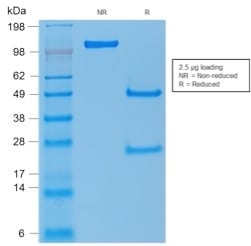
- 53 kDa
- Quelle:
- Animal
- Lagerbedingungen:
- -20[o]C Avoid freeze/thaw cycles.
- Hersteller:
- Biotium
- Host:
- Mouse
- Reaktivitäten:
- Human, Mouse
- Buffer:
- PBS, no BSA, no azide|PBS, no BSA, no sodium azide
- Immunogen:
- Recombinant full-length human TP53 protein
- Formulierung:
- PBS, no BSA, no azide
- Klon:
- rTP53/1739
- Uniprot:
- P04637
- Synonyme:
- antigen NY-CO-13;BCC7;BMFS5;cellular tumor antigen p53;LFS1;mutant tumor protein 53;P53;p53 tumor suppressor;phosphoprotein p53;transformation-related protein 53;TRP53;tumor protein 53;Tumor suppressor p53;tumor supressor p53
- Weitere Details:
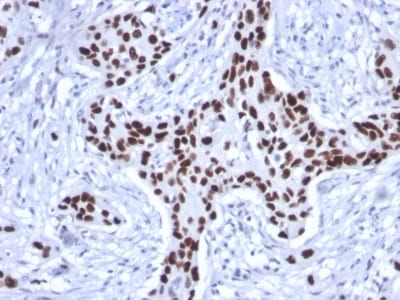
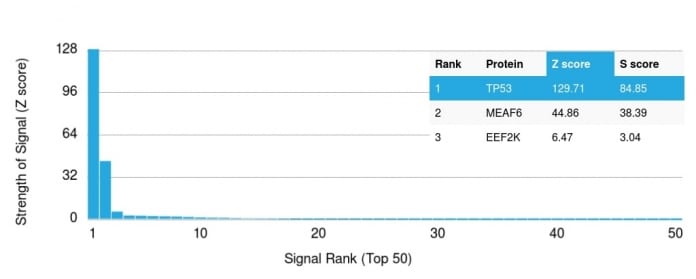
- The specificity of this monoclonal antibody to its intended target was validated by HuProt™ Array, containing more than 19,000, full-length human proteins. Recognizes a 53 kDa protein, which is identified as p53 suppressor gene product. It reacts with the mutant as well as the wild form of p53. It is a tumor suppressor protein expressed in a wide variety of tissue types and is involved in regulating cell growth, replication, and apoptosis. It binds to MDM2, SV40 T antigen and human papilloma virus E6 protein. Positive nuclear staining with p53 antibody has been reported to be a negative prognostic factor in breast, lung, colorectal, and urothelial carcinoma. Anti-p53 positivity has also been used to differentiate uterine serous carcinoma from endometrioid carcinoma as well as to detect intratubular germ cell neoplasia. Mutations involving p53 are found in many malignant tumors, including breast, ovarian, bladder, colon, lung, and melanoma.Primary antibodies are available purified, or with a selection of fluorescent CF® Dyes and other labels. CF® Dyes offer exceptional brightness and photostability. Note: Conjugates of blue fluorescent dyes like CF®405S and CF®405M are not recommended for detecting low abundance targets, because blue dyes have lower fluorescence and can give higher non-specific background than other dye colors.
- Versandbedingungen:
- Ambient