BNUB3190
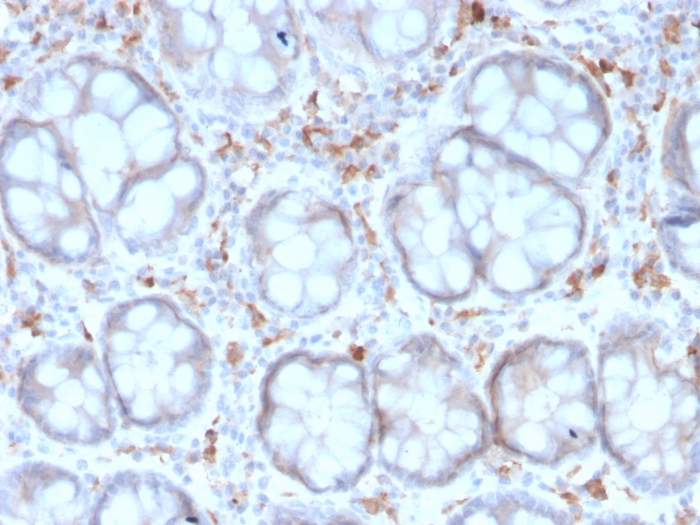
CD209 / DC-SIGN (Pathogen Receptor on Dendritic Cells)(rC209/1781), 0.2mg/mL

Eine Lieferung in diese Region ist nicht möglich.
- SKU:
- BNUB3190
- Zusätzliche Namen:
- CD209; CDSIGN; CIRE; CLEC4L; DC-SIGN; DC-SIGN1; DCSIGN; Dendritic cell-specific ICAM-3 Grabbing Non-integrin 1; HIV GP120 Binding Protein; SIGN-R1; SIGNR5
- Anwendung:
- IHC-P
- Konzentration:
- 0.2 mg/ml
- Molekulargewicht:
- 45 kDa
- Quelle:
- Animal
- Lagerbedingungen:
- 2-8[o]C, RT
- Hersteller:
- Biotium
- Host:
- Mouse
- Reaktivitäten:
- Human
- Buffer:
- PBS, 0.05% BSA, 0.05% azide|PBS, 0.05% BSA, 0.05% sodium azide
- Immunogen:
- Recombinant human CD209 protein fragment (exact sequence is proprietary)
- Formulierung:
- PBS, 0.05% BSA, 0.05% azide
- Klon:
- rC209/1781
- Uniprot:
- Q9NNX6
- Synonyme:
- C-type lectin domain family 4 member L;CD209 antigen;CDSIGN;CLEC4L;DC-SIGN;DC-SIGN1;dendritic cell-specific ICAM-3-grabbing non-integrin 1;dendritic cell-specific intercellular adhesion molecule-3-grabbing non-integrin;dendritic cell-specific intracellular adhesion molecules (ICAM)-3 grabbing non-integrin;hDC-SIGN;HIV gpl20-binding protein
- Weitere Details:
- DC-SIGN is a transmembrane receptor that is expressed on the surface of dendritic cells and macrophages. It is involved in the innate immune system and recognizes numerous evolutionarily divergent pathogens ranging from parasites to viruses. The protein is organized into three distinct domains: an N-terminal transmembrane domain, a tandem-repeat neck domain and C-type lectin carbohydrate recognition domain. The extracellular region consisting of the C-type lectin and neck domains has a dual function as a pathogen recognition receptor and a cell adhesion receptor by binding carbohydrate ligands on the surface of microbes and endogenous cells. The neck region is important for homo-oligomerization, which allows the receptor to bind multivalent ligands with high avidity. Primary antibodies are available purified, or with a selection of fluorescent CF® Dyes and other labels. CF® Dyes offer exceptional brightness and photostability. Note: Conjugates of blue fluorescent dyes like CF®405S and CF®405M are not recommended for detecting low abundance targets, because blue dyes have lower fluorescence and can give higher non-specific background than other dye colors.
- Versandbedingungen:
- Ambient