BNUB0669
p27 / KIP1(SX53G8), 0.2mg/mL

Eine Lieferung in diese Region ist nicht möglich.
- SKU:
- BNUB0669
- Zusätzliche Namen:
- CDKN1B, CDKN4, Cyclin Dependent Kinase Inhibitor 1B, Cyclin-dependent kinase inhibitor p27 Kip1, KIP1, MEN1B, MEN4
- Anwendung:
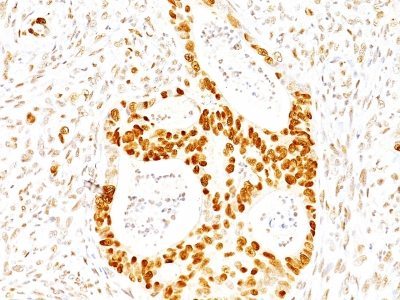
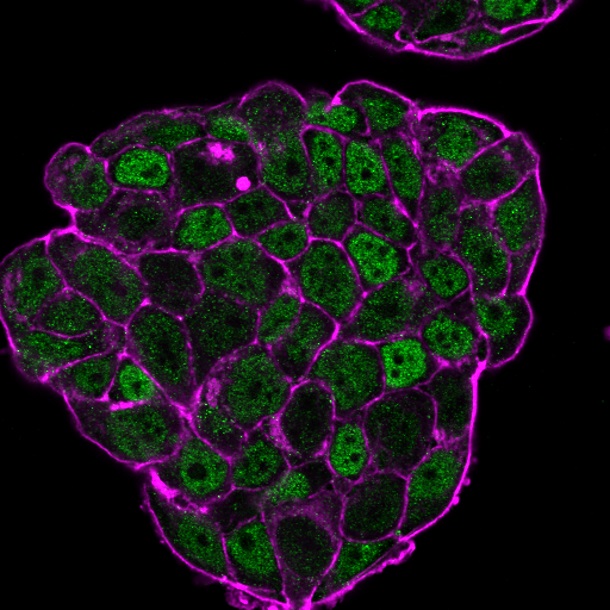
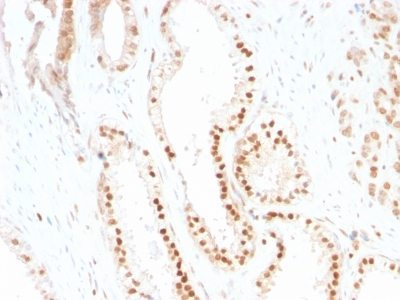
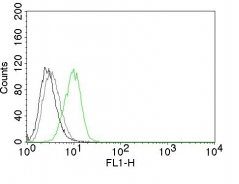
- Flow Cytometry, WB, IHC-P, IF, IP
- Konzentration:
- 0.2 mg/ml
- Molekulargewicht:
- 25-26 kDa
- Quelle:
- Animal
- Lagerbedingungen:
- 2-8[o]C, RT
- Hersteller:
- Biotium
- Host:
- Mouse
- Reaktivitäten:
- Bovine, Human, Mouse, Rat
- Buffer:
- PBS, 0.05% BSA, 0.05% azide|PBS, 0.05% BSA, 0.05% sodium azide
- Immunogen:
- Purified GST-p27 fusion protein of human origin
- Formulierung:
- PBS, 0.05% BSA, 0.05% azide
- Klon:
- SX53G8
- Uniprot:
- P46527
- Synonyme:
- CDKN4;cyclin-dependent kinase inhibitor 1B;cyclin-dependent kinase inhibitor 1B (p27, Kip1);Cyclin-dependent kinase inhibitor p27;KIP1;MEN1B;MEN4;P27KIP1
- Weitere Details:
- This MAb recognizes a 27 kDa protein, identified as the p27Kip1, a cell cycle regulatory mitotic inhibitor. It is highly specific and shows no cross-reaction with other related mitotic inhibitors. In Western blotting of cell lysates from 7 human breast cancer cell lines (ZR75-1, ZR75-30, MCF-7, MDAMB453, T47D, CAL51, 734B), the antibody labels a single band corresponding to p27Kip1. It functions as a negative regulator of G1 progression and has been proposed to function as a possible mediator of TGF-betanduced G1 arrest. p27Kip1 is a candidate tumor suppressor gene. Reportedly, low p27 expression has been associated with unfavorable prognosis in renal cell carcinoma, colon carcinoma, breast carcinomas, non-small-cell lung carcinoma, hepatocellular carcinoma, multiple myeloma, and lymph node metastases in papillary carcinoma of the thyroid, as well as a more aggressive phenotype in carcinoma of the cervix.Primary antibodies are available purified, or with a selection of fluorescent CF® Dyes and other labels. CF® Dyes offer exceptional brightness and photostability. Note: Conjugates of blue fluorescent dyes like CF®405S and CF®405M are not recommended for detecting low abundance targets, because blue dyes have lower fluorescence and can give higher non-specific background than other dye colors.
- Versandbedingungen:
- Ambient