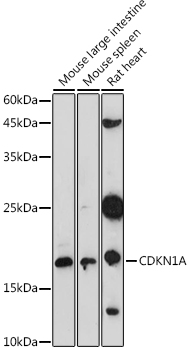

A20471
CDKN1A Rabbit polyclonal antibody

Größe
£152.00
- SKU:
- A20471
- Zusätzliche Namen:
- CAP20|CDKI|Cdkn1|CDKN1A|CIP1|mda6|P21|p21Cip1|p21WAF|SDI1|Waf1
- Anwendung:
- ELISA, WB
- Molekulargewicht:
- 21kDa
- Spezies-Reaktivität:
- Mouse
- Aufreinigung:
- Affinity Purified
- Lagerbedingungen:
- -20[o]C Avoid freeze/thaw cycles.
- Hersteller:
- Abclonal
- Host:
- Rabbit
- Reaktivitäten:
- Mouse, Rat
- Immunogen:
- Recombinant protein (or fragment).This information is considered to be commercially sensitive.
- Formulierung:
- Unmodified
- Sequenz:
- MSNPGDVRPVPHRSKVCRCLFGPVDSEQLRRDCDALMAGCLQEARERWNFDFVTETPLEGNFVWERVRSLGLPKVYLSPGSRSRDDLGGDKRPSTSSALLQGPAPEDHVALSLSCTLVSERPEDSPGGPGTSQGRKRRQTSLTDFYHSKRRLVFCKRKP
- Uniprot:
- P39689
- Synonyme:
- CAP;CAP20;CDK;CDK-interacting protein 1;CDK-interaction protein 1;CDKI;Cdkn;CDKN1;CI;CIP1;cyclin-dependent kinase inhibitor 1;cyclin-dependent kinase inhibitor 1A (p21, Cip1);DNA synthesis inhibitor;mda;MDA-6;mda6;melanoma differentiation associated protein 6;melanoma differentiation-associated protein;P2;P21;p21C;p21CIP1;p21W;p21WAF;SD;SDI1;Waf;WAF1;wild-type p53-activated fragment 1
- Weitere Details:
- This gene encodes a potent cyclin-dependent kinase inhibitor. The encoded protein binds to and inhibits the activity of cyclin-cyclin-dependent kinase2 or cyclin-dependent kinase4 complexes, and thus functions as a regulator of cell cycle progression at the G1 pahse. The expression of this gene is tightly controlled by the tumor suppressor protein p53, through which this protein mediates the p53-dependent cell cycle G1 phase arrest in response to a variety of stress stimuli. This protein can interact with proliferating cell nuclear antigen, a DNA polymerase accessory factor, and plays a regulatory role in S phase DNA replication and DNA damage repair. This protein was reported to be specifically cleaved by CASP3-like caspases, which thus leads to a dramatic activation of cyclin-dependent kinase2, and may be instrumental in the execution of apoptosis following caspase activation. Mice that lack this gene have the ability to regenerate damaged or missing tissue. Alternative splicing results in multiple transcript variants.
- Versandbedingungen:
- Blue Ice