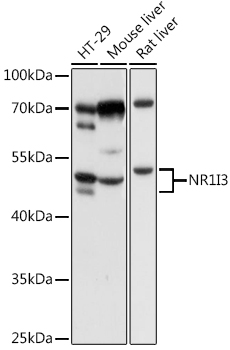
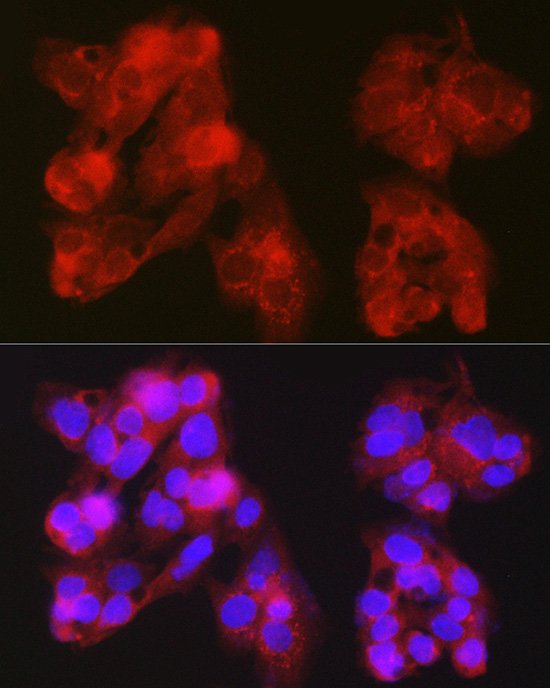


A1970
NR1I3 Rabbit polyclonal antibody

Größe
£152.00
- SKU:
- A1970
- Zusätzliche Namen:
- CAR|CAR1|MB67|NR1I3
- Anwendung:
- ELISA, WB, IF, ICC, IP
- Molekulargewicht:
- 45kDa/40kDa
- Spezies-Reaktivität:
- Human
- Aufreinigung:
- Affinity Purified
- Lagerbedingungen:
- -20[o]C Avoid freeze/thaw cycles.
- Hersteller:
- Abclonal
- Host:
- Rabbit
- Reaktivitäten:
- Human, Mouse, Rat
- Immunogen:
- Recombinant protein (or fragment).This information is considered to be commercially sensitive.
- Formulierung:
- Unmodified
- Sequenz:
- PVQLSKEQEELIRTLLGAHTRHMGTMFEQFVQFRPPAHLFIHHQPLPTLAPVLPLVTHFADINTFMVLQVIKFTKDLPVFRSLPIEDQISLLKGAAVEICHIVLNTTFCLQTQNFLCGPLRYTIEDGARVSPTVGFQVEFLELLFHFHGTLRKLQLQEPEYVLLAAMALFSPDRPGVTQRDEIDQLQEEMALTLQSYIKGQQRRPRDRFLYAKLLGLLAELRSINEAYGYQIQHIQGLSAMMPLLQEICS
- Uniprot:
- Q14994
- Synonyme:
- CAR;CAR1;constitutive activator of retinoid response;constitutive active receptor;constitutive active response;constitutive androstane nuclear receptor variant 2;constitutive androstane nuclear receptor variant 3;constitutive androstane nuclear receptor variant 4;constitutive androstane nuclear receptor variant 5;constitutive androstane receptor;MB67;nuclear receptor subfamily 1 group I member 3;orphan nuclear hormone receptor;orphan nuclear receptor MB67
- Weitere Details:
- This gene encodes a member of the nuclear receptor superfamily, and is a key regulator of xenobiotic and endobiotic metabolism. The protein binds to DNA as a monomer or a heterodimer with the retinoid X receptor and regulates the transcription of target genes involved in drug metabolism and bilirubin clearance, such as cytochrome P450 family members. Unlike most nuclear receptors, this transcriptional regulator is constitutively active in the absence of ligand but is regulated by both agonists and inverse agonists. Ligand binding results in translocation of this protein to the nucleus, where it activates or represses target gene transcription. These ligands include bilirubin, a variety of foreign compounds, steroid hormones, and prescription drugs. In addition to drug metabolism, the CAR protein is also reported to regulate genes involved in glucose metabolism, lipid metabolism, cell proliferation, and circadian clock regulation. Multiple transcript variants encoding different isoforms have been found for this gene.
- Versandbedingungen:
- Blue Ice